









Russian plum: The story of the birth of indestructible fruit
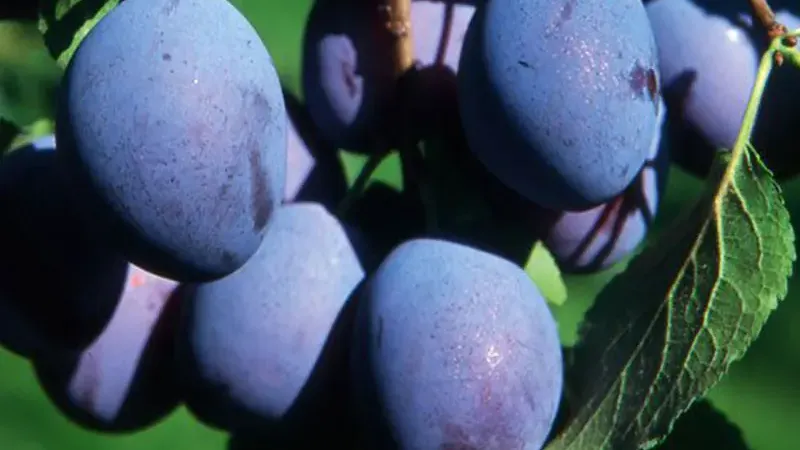
The Russian Plum: The Fascinating Story of the Birth of an Indestructible Fruit
In modern fruit growing, which faces the challenges of climate change, we are looking for heroes. We are looking for plants that not only survive but thrive. One of the greatest heroes that 20th-century breeding has given us is the Russian Plum (Prunus × rossica).
You may know it by the common misnomer "Siberian plum." However, this name is misleading. Its true story is much more complex and fascinating. It is a story of rescuing a treasure from the orchards of Crimea and of a bold vision to create the perfect stone fruit—a synthesis of the best traits from several species at once.
Chapter 1: The Discovery of a Lost Treasure in Crimea
The story begins after the Second World War. A scientist, Klavdiya Fyodorovna Kostina, embarks on a mission into the abandoned orchards on the southern coast of Crimea. Her goal is rescue. Among the ruins, she discovers a real treasure—local forms of cherry plum (Prunus cerasifera), known as "alycha."
These trees were tough, resistant to drought and diseases, and ripened incredibly early. They had one flaw, however: small fruit. But Kostina saw immense potential in them. In 1949, she began to experiment, crossing this Crimean hardiness with large-fruited varieties of Japanese plum (Prunus salicina). The first results were promising and laid the foundation for something much greater.
Chapter 2: The Birth of a Superhero – The Work of Academician Yeremin
Building on Kostina's work was Academician Gennady Viktorovich Yeremin. His vision was even more ambitious. He didn't just want to combine two species. He wanted to create a perfect "synthetic" species that would carry the superpowers of several parents. Thus began the project of complex interspecific hybridization.
Meet the Parents: A Who's Who in the Russian Plum's Genealogy?
Each parent brought a unique gift to the table:
- Cherry Plum (Prunus cerasifera): "The Survivor". It provided the genes for adaptability, resistance to drought and diseases, and the ability to regenerate after frost damage.
- Japanese Plum (Prunus salicina): "The Beauty". It brought large, attractive fruits, high productivity, and an early onset of bearing.
- Ussurian Plum (Prunus ussuriensis): "The Hardy One". The key gift from the Russian Far East—extreme frost hardiness of both wood and flower buds (to below -40 °C).
- Chinese Plum (Prunus simonii): "The Gourmet". Although used to a lesser extent, it contributed firm, crisp flesh, a specific apricot aroma, and resistance to heat.
After years of repeated crossing and careful selection, a new hero was born. In 1999, G. V. Yeremin officially named it: Prunus × rossica, the Russian Plum.
Profile of a Champion: What Makes the Russian Plum So Exceptional?
The Russian Plum is more than just the sum of its parts. It is a perfectly balanced fruit tree, ideal for the conditions of a continental climate.
- Adaptability and Resilience: It is a master of survival. It handles winter frosts (down to -35 °C), temperature fluctuations, summer heat, and drought. In hardiness, it surpasses our common European plum.
- Health and Low Maintenance: It naturally resists many common diseases, such as shot hole disease or leaf spot. This makes it an ideal choice for organic cultivation without chemicals.
- Productivity and Earliness: The trees begin to bear fruit very early, often in the 2nd to 3rd year after planting. Yields are high and regular.
- Flavor Diversity: The fruits are large (30–100 g) and incredibly diverse. You can find yellow ('Zlato Skifov'), pink ('Nezhenka'), and dark purple ('Kubanskaya Kometa') varieties. The taste is harmonious, sweet-tart, often with exotic notes.
The Story of Resilience in Your Garden
The Russian Plum is living proof of what human vision and the power of nature can achieve. It is a fruit created for the future, capable of thriving where other species fail. Explore the world of hardy and tasty stone fruits in our selection and find the right one for your garden.
Conclusion: A Legacy for the Future
The Russian Plum is not just another fruit tree. It is a prime example of a successful breeding program that has given us a strategic genetic resource for the 21st century. It is a valuable contribution for home gardeners and commercial growers alike, and a living legacy of the Crimean and Russian school of breeding.
Its story is an inspiration and a reminder that, through systematic work, we can cultivate fruit that brings joy and harvests even in a changing world.
Did the story of the Russian Plum intrigue you? Let us know in the comments!