









Treacherous Sun and Purple Treasure: Saving Anthocyanins When You Dry Fruit
Treacherous Sun and Purple Treasure
Why traditional drying destroys the anthocyanins in berries – and how to save them in a dehydrator
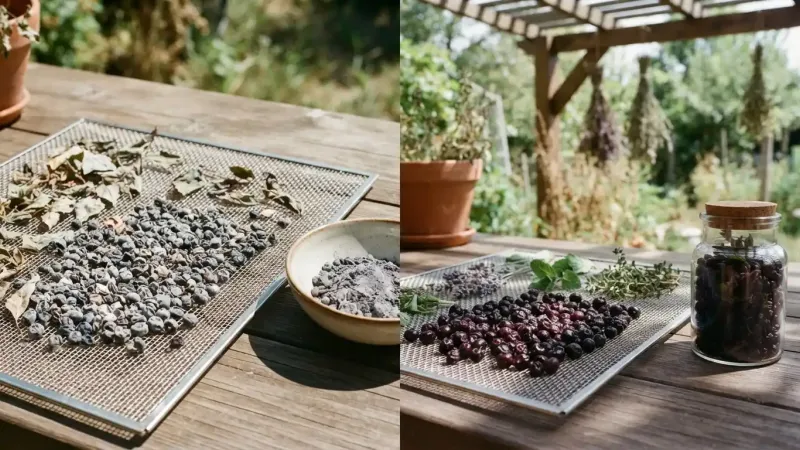
The image is almost idyllic: wooden trays heaped with blueberries, raspberries or slices of purple potato, drying slowly on a sunlit summer terrace. This picture of home food preservation has been handed down through generations. Food science and the biochemistry of the fruit, however, deliver an important reality check.
If your goal is to keep the “purple power” in your harvest – the precious anthocyanins – then direct sunlight and free access to air are your worst enemies. While freezing actually protects these compounds, drying follows entirely different and far stricter rules.
|
40–50°C
recommended drying temperature
|
1–2 min
blanching time for purple vegetables
|
3
main enemies: heat, light, oxygen
|
50 < 70°C
lower temperature retains more anthocyanins
|
← Swipe the table sideways →
Purple is more than just a colour
Anthocyanins are water-soluble pigments that give fruit and vegetables their red, blue and purple colouring. They matter most in blueberries, blackberries, raspberries, strawberries, blackcurrants and sour cherries, but also in red cabbage and purple potatoes.
From a medical point of view, anthocyanins are a treasure. They act as very powerful antioxidants, protect cells against oxidative stress, support cardiovascular health, improve cognitive function and show anti-inflammatory effects (Muzamail et al., 2025; Anih et al., 2025). The problem is that they are extremely sensitive to heat, light and oxidation (Nayak et al., 2015).
Anatomy of the damage: oxygen and ultraviolet radiation
The problem is not the removal of water itself, but the conditions under which it happens. Chemically speaking, anthocyanins are highly reactive compounds. That very structure makes them excellent antioxidants inside our body, but it also makes them vulnerable to the external environment.
Warning: In canning, the fruit is shielded from oxygen inside a sealed jar and the heat acts in a liquid medium. In sun drying, the crop faces three unfavourable factors at once: dry heat, unlimited oxygen and aggressive UV radiation.
Comparing the processing methods
| Processing method | Oxygen exposure | Light and UV exposure | Thermal load | Effect on anthocyanins |
|---|---|---|---|---|
| Freezing | minimal, in sealed packaging | none | none, cold instead of heat | favourable, the compounds are protected |
| Canning | low, sealed jar | none | high, but in liquid | moderate, fruit shielded from oxygen |
| Indoor dehydrator (40–50°C) | moderate, circulating air | none if kept out of sunlight | low to moderate | smallest losses of all drying methods |
| Drying in direct sunlight | very high | high, intense UV | high, dry heat | drastic losses and fading (Nayak et al., 2015) |
← Swipe the table sideways →
Indicative risk to anthocyanins by processing method (shorter bar = gentler)
| Freezing | very low |
| Dehydrator at 40–50°C, in the dark | low |
| Dehydrator at 70°C | higher |
| Drying in direct sunlight | very high |
← Swipe sideways →
This scale is qualitative and illustrative. It ranks the methods according to the mechanisms described above (oxygen exposure, UV radiation, temperature); it does not show measured percentage losses.
Which crops are affected
The dehydrator as a scientific safe
If you want to keep the purple power and end up with dried produce rich in antioxidants, swap the sunny terrace for an electric food dehydrator and follow four rules.
| Drying temperature | 40–50°C |
| 30°C – gentle on anthocyanins | 80°C – rapid breakdown |
The marker shows the recommended 40–50°C window within the 30–80°C range typical of household dehydrators.
Storage: the fight against oxygen continues
Drying is not the end of the process. Anthocyanins remain sensitive to oxidation. If you leave dried blueberries or purple potato slices in an open bag on a brightly lit shelf, their nutritional value will fall quickly.
Rules for proper storage
Keep dried produce in airtight, ideally opaque containers, somewhere cool and dark such as a pantry. Vacuum packing is the best solution from a scientific standpoint, because it removes access to oxygen altogether.
Visual guide: what helps anthocyanins and what harms them
Freezing fresh fruit
Indoor dehydrator at 40–50°C
Vacuum or airtight packaging kept cool and dark
Drying at high temperatures (70°C and above)
Long drying of thick vegetable slices without blanching
Drying on trays in direct sunlight
Storing in open packaging in the light
Purple power in the form of anthocyanins is fragile. In the freezer it is safe; in open sun and open air it perishes.
Conclusion
Traditional sun drying has an undeniable romantic charm. But if our goal is functional nutrition and getting the most health-promoting compounds out of the harvest, we have to adapt to the biochemistry of the fruit.
Using an electric dehydrator, controlling the temperature, excluding light and storing the produce airtight are not merely modern fads. They are scientifically grounded tools that let your winter pantry keep not only the colours of summer, but above all its undamaged nutritional value.
|
Grow your own purple power Our range includes blueberry, blackberry, blackcurrant and sour cherry cultivars with a high anthocyanin content. Quality plants in your own garden are the first step towards a pantry full of antioxidants. Browse the cultivars → |
Join our community Share your growing experience, ask about cultivars and show off your harvest on our Facebook page full of keen fruit growers, talk to specialists and be the first to get access to new articles. Visit our Facebook page → |
← Swipe the table sideways →