









Secrets of Peach Growing: Irrigation, Frost & Chilling Needs
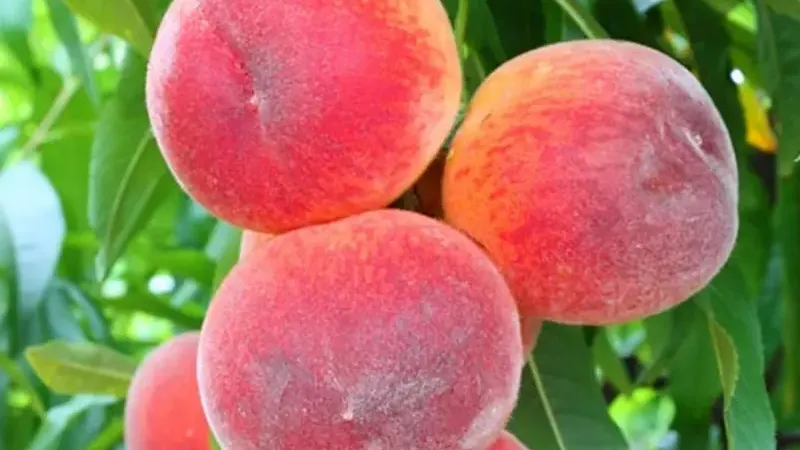
Extremes of the Peach Orchard: Why the Tree Needs Winter Frost, Fears Spring Freeze, and Loves Summer Thirst
The peach (Prunus persica) is the uncrowned queen of summer fruit. Its velvety skin, intoxicating aroma, and sweet juice evoke hot July days. From a physiological point of view, however, this tree is a masterpiece of nature that balances on a tightrope between extremes. It is a huge paradox that this symbol of summer would not yield a crop at all without a freezing winter, and that the path to the juiciest fruits leads through targeted water deprivation.
Growing premium peaches is no longer just about flooding the orchard with water and waiting for the harvest. It is a precise science. Let's dive into the physiology of peaches and discover why winter is vital for them, why spring frost is their greatest enemy, and what "regulated deficit irrigation" actually is.
“Logic would whisper to us that if we want to grow large and juicy peaches, we must constantly and abundantly water the trees. Modern fruit science, however, comes with a surprising finding: the path to high fruit quality sometimes leads through targeted thirst.”
Part I: Winter Sleep and the Threat of Spring
Geographical Compromise and the Need for Cold
Commercial peach growing is concentrated globally in a very specific belt – between 30° and 45° latitude. Towards the poles, cultivation is limited by extreme winter frosts (the whole tree freezes at -25 °C), while towards the equator, winter chill is lacking.
Why does a tree from the temperate zone need winter? It is an evolutionary defense mechanism. If trees were to bloom immediately upon the first warming after autumn leaf fall (which would lead to their destruction by frost), they enter a state of deep rest – dormancy. To awaken from it, they must accumulate a certain amount of cold (so-called chilling requirements), which is usually 50 to 1200 hours at temperatures below 7 °C, depending on the variety.
What Happens if the Winter is Too Warm?
If the tree does not fulfill its "quota" of cold, a physiological disaster occurs. The consequence is the dropping of flower buds, irregular blooming, and a drastic reduction or complete loss of the crop. That is why breeders develop so-called "low-chill" varieties for subtropical areas, which need only 150 hours of chill to awaken.
Spring Frosts: The Silent Crop Killer
If the tree successfully survives the winter, spring arrives. And with it, the greatest threat. Peaches bloom very early. While in deep dormancy, the buds can withstand -20 °C, as soon as the flowers open, they are damaged at temperatures from -3.6 °C to -1.1 °C. Even more sensitive are young fruits, which die already at -2.7 °C.
How to defend against it? Besides choosing late-blooming varieties, the application of plant growth regulators (PGRs) is also being researched. An autumn spray can delay spring blooming by 2 days, which can save the entire crop during a critical period.
Part II: Thirsty Peaches and the Art of Irrigation
A peach is made up of approximately 87% water. Since the market demands large fruits, peaches are grown under drip irrigation in most commercial areas. However, experts point out that excessive irrigation is undesirable. It leads to vigorous leaf growth at the expense of fruit, prevents wood maturation before winter, and causes fruits to be huge but watery, tasteless, and quick to spoil.
The Three Life Phases of a Peach
To understand when the tree really needs water, we must know the fruit growth curve, which has the shape of a double wave (sigmoid curve):
- Phase I (Cell Division): Begins after pollination. The fruit reaches 20% of its size. This phase is extremely sensitive to drought – lack of water will reduce the number of cells, and the fruit will never grow to large dimensions. Fortunately, there is usually enough water in the soil in spring.
- Phase II (Pit Hardening): Fruit growth slows down significantly. The tree's energy goes into the growth of long summer shoots and leaves. This is the key period for applying stress.
- Phase III (Exponential Growth): After the pit hardens, the cells rapidly "fill" with water until harvest. A lack of water in this phase drastically reduces yield and fruit size.
Regulated Deficit Irrigation (RDI): The Art of Thirst
Based on these phases, scientists developed a strategy called Regulated Deficit Irrigation (RDI).
The principle is that the grower deliberately reduces the water supply exactly during Phase II (pit hardening). Research has shown that drought in this phase slows the growth of vigorous branches, but has no negative impact on fruit growth. When full irrigation is restored at the beginning of Phase III, the fruits undergo compensatory growth and fully recover.
Benefits of Applying RDI
| Water Savings | Reduction of water consumption by 15 to 20% without loss of yield. |
| Less Pruning | Mild stress stops the vigorous growth of branches, significantly saving costs on summer pruning and canopy thinning. |
| Higher Quality Fruits | The fruits are firmer, have a better-colored skin, and above all, a higher sugar content (TSS). |
Beware of Post-Harvest Stress!
RDI only works with proper fruit thinning. It is equally important not to forget about the trees after harvest. August and September are critical for the formation of flower buds for the next year. Severe drought after harvest causes physiological disorders in the following year – especially "twin peaches" and deep sutures on the fruits. You must return water to the tree after harvest.
Conclusion
Growing peaches is proof that nature works on the principle of a delicate balance. The tree needs cold to survive the winter but fears it in the spring. And while water is life for it, the RDI technique proves that if we can deny the tree a little comfort at the right time, it will reward us not only by saving precious water and reducing pruning effort, but above all with firmer, sweeter, and more beautifully colored fruits. A little thirst truly brings out the best flavor.
Choose Varieties for Your Climate
View our offer of frost-hardy peaches ➤
Want to Learn Modern Irrigation Techniques?
Join our community and ask the experts directly.
Join the VIP Facebook group HERE ➤