









Blueberries: The Science of Taste, Texture, and Winter Sleep
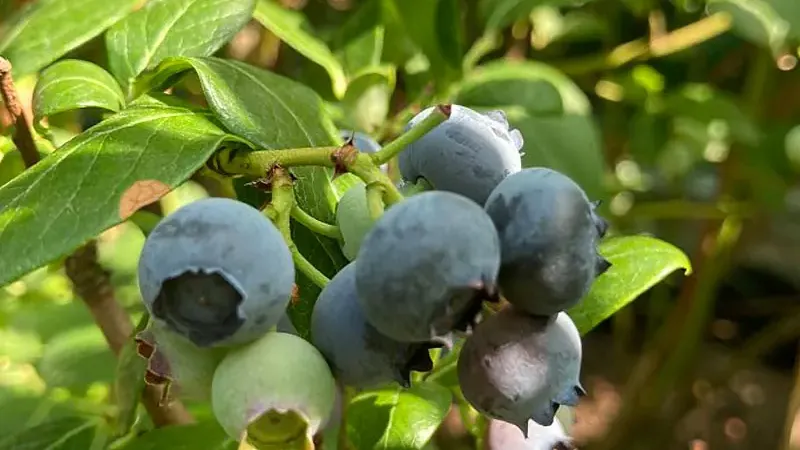
A Symphony of Taste and Frost: How Genetics and Winter Sleep Define the Perfect Blueberry
There is not just one kind of blueberry. For the average consumer in a supermarket, the difference might only be in the size of the berry, but for the expert and grower, it is a world full of nuances. Each of the five main types of blueberries offers a unique sensory profile and conceals strict biological clocks that determine whether the bush will yield a crop at all.
This extensive article takes you behind the scenes of modern fruit growing. In the first part, we will analyze how the definition of a "quality blueberry" has changed – from the massive, crunchy berries of the south to the tiny, aromatic bombs of the north. In the second part, we will reveal a paradox of nature: why this symbol of summer abundance absolutely requires a freezing winter.
“Fruit quality and the ability to survive winter are two sides of the same coin. Breeders have spent decades manipulating genetics to bring us crunchy fruits in supermarkets while teaching plants to bloom exactly when the threat of frost has passed.”
Part I: From Forest Flavor to Crunchy Standard – The Evolution of Fruit Quality
When Frederick Coville introduced the first cultivated blueberry to the world in 1916, his goal was simple: to obtain larger fruits that would be easier to harvest. Today, quality encompasses size, firmness, crunchiness, shelf life, and the balance of sugars and acids.
1. Northern Highbush (NHB): The Fresh Market Benchmark
Northern Highbush defined what we consider a "standard" blueberry today. Varieties like 'Bluecrop' set the standard for the classic taste – a balanced ratio of sweetness and acidity with a mild aroma.
A key quality parameter in modern NHB (like 'Draper' or 'Liberty') is firmness and the presence of a waxy bloom. This bloom gives the fruits an attractive light blue color. Sensory studies have shown that consumers of NHB prefer fruits with a higher sugar content and a thin skin that is not obtrusive when eaten.
2. Southern Highbush (SHB): The Crunchiness Revolution
Southern Highbush pushed the quality bar to a new level, especially in texture. Thanks to the introgression of genes from V. darrowii, it was possible to breed varieties with extremely firm, even "crisp" flesh.
The "Jumbo and Crisp" Category
Varieties like 'Sweetcrisp' literally pop when you bite into them. Besides texture, they excel in gigantic size and high sugar content. Visually, the fruits are extremely attractive, with a persistent waxy bloom and a small, dry picking scar, which rapidly increases their durability during transport from South America to Europe.
3. Rabbiteye (RE): From "Pebbles" to Sweetness
Historically, Rabbiteye had a reputation for fruits with a thicker skin and the presence of sclereids (stone cells) in the flesh, which created a "gritty" feeling in the mouth. This was the price paid for the plant's extreme resilience.
However, new varieties like 'Titan' are changing this. They have huge fruits (up to 3 g) with thinner skin. Their taste is specific – when fully ripe, they are extremely sweet (high sugar-to-acid ratio), but if picked prematurely, they can be tart. A typical feature of RE is also the variability in color – from light blue ('Powderblue') to almost black.
4. Nordic Specialties: Half-high and Lowbush
- Half-high (HH): These varieties (e.g., 'Northblue') combine the fruit size of NHB with the intense "wild" flavor of Lowbush. They excel in a high content of aromatic compounds and anthocyanins. They are especially popular in local markets for their authentic taste.
- Lowbush (LB): They are unique in the quality category. The fruits are small (5 – 8 mm), but they have the highest antioxidant content per unit of weight among all types. Their "wild" taste (a mix of sweetness, acidity, and tartness) is unsurpassed for the processing industry (jams, yogurts), where it retains its character better than the milder Highbush fruits.
Part II: When Winter Decides the Harvest – The Secret of Chilling Requirements
For most people, winter is a time of sleep, but for blueberries, it is a time of intense physiological activity. In order for the buds to wake up and bloom in the spring, they must accumulate a certain amount of cold during the winter – so-called "chilling hours" (hours with temperatures below 7 °C).
This genetically encoded failsafe prevents premature budding during winter warm-ups. Ignoring this factor when planting leads to fatal consequences: delayed budding, dropping of flower buds, and zero harvest.
Chilling Requirements by Type
| Blueberry Type | Chill Hours (< 7 °C) | Reason for Adaptation |
|---|---|---|
| Northern Highbush | 800 – 1000 hours | Protection against false spring in temperate zones. |
| Southern Highbush | 100 – 400 hours | Ability to grow and fruit in the subtropics (some cultivars 0 hours). |
| Rabbiteye | 300 – 600 hours | Adaptation to mild winters in the southern USA. Blooms extremely fast after fulfilling the quota. |
| Half-high / Lowbush | > 1000 hours | Deep dormancy to survive arctic winters (often linked with day length). |
Why is this important?
What is a necessary protection in Michigan (1000 hours for NHB) becomes an insurmountable barrier in Florida, because such a winter simply does not exist there. That is why Southern Highbush (SHB) was created, which broke this barrier and allowed the emergence of a huge industry in Spain, Peru, or Morocco.
The Trap of Low Chilling Requirement in Europe
If you plant a "low-chill" variety (SHB) in Central Europe, it will accumulate its required 200 hours of chill already in December. At the first warming in January or February, the tree wakes up, blooms, and the subsequent spring frost completely destroys the harvest. Therefore, proper variety selection is crucial!
Conclusion
Fruit quality and phenology (chilling requirement) are invisible forces that determine the success of cultivation. Northern Highbush remains the universal standard for our gardens, Southern Highbush pushes the boundaries of texture in the greenhouses of the south, Rabbiteye offers robustness, and Nordic types bring the unadulterated taste of the wilderness. Understanding and respecting these "biological clocks" and flavor profiles is the first and most important step when choosing a variety for any location.
Choose a variety exactly for your climate and taste
Check out our offer of premium blueberries ➤
Have questions about spring frosts and variety selection?
Join our community and ask experienced growers.
Join the VIP Facebook group HERE ➤