Cart

Fig Tree (Ficus carica) VIOLETTE DE SOLLIÈS
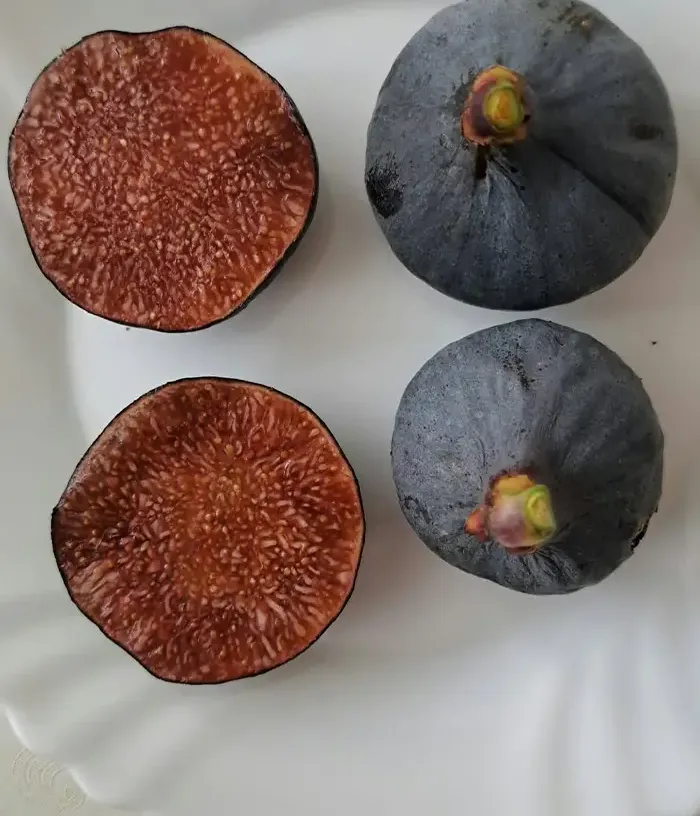
Fig Tree (Ficus carica) VIOLETTE DE SOLLIÈS
New
Fig Tree (Ficus carica) VIOLETTE DE SOLLIÈS
Specifications
Height at sale50cm
Pot2,5l
Sell as2 year old
Ripening timeSeptember/October
The standard delivery time for Germany is 3-5 working days.(except for goods "On request")
We send goods on Monday, Tuesday, Wednesday, by agreement also Thursday or Friday.
Price
39.00€
Ex Tax: 34.51€
  • Stock: In Stock
  • Model: Ficus carica

Common Fig - Variety 'Violette de Solliès'

'Violette de Solliès' (technically originating from the Bourjassotte noire line) is an absolute jewel of southern France and a true gourmet experience. This variety is a household name in the fig world – it is the only fig variety in France to have been awarded the prestigious AOC/AOP status. It is the ideal choice for growers in warmer regions looking for a fig with a unique, premium flavor profile.


Common Fig (Ficus carica) 'Violette de Solliès'

Fig cultivation in the Solliès region dates back to antiquity. In June 2006, it received the French AOC status and since January 2012, it has been fully protected throughout the EU under the AOP (Appellation d'Origine Protégée) label. The name "Figue de Solliès AOP" can only be used for figs grown and processed in 15 specific municipalities in the Var department.

Main advantages of the variety:

  • Prestigious status: The only fig in France with AOC/AOP status.
  • World-renowned taste: Complex flavor with notes of strawberries, melon, rhubarb, and flowers.
  • High-quality fruits: Large, meaty, and extremely sweet fruits (min. 14° Brix).
  • Early fruiting: Fast growth and first harvest just 1-2 years after planting.
  • Self-fertility and yield: Does not need a pollinator and achieves high yields (4.5 - 7 kg per plant and more).
Detailed variety description: Plant
  • Growth and shaping: Grows very fast and vigorously. Traditionally shaped into an open-center (goblet) canopy, allowing harvest directly from the ground without ladders.
  • Leaves: They are huge, often compared to "dinner plates," giving the plant a distinct tropical appearance.
  • Cold hardiness: Classified in USDA zone 7. Mature wood can withstand short-term temperature drops to -15 °C to -17 °C. In our conditions, growing in containers with cold wintering or thorough winter protection when planted in the ground is recommended.
Fruits and flavor profile
  • Appearance and shape: The fruits have a diameter of at least 40 mm, a characteristic water drop shape, are slightly flattened, and have a long stem.
  • Color and skin: The skin is thin, flexible, and resistant, dark purple to black, slightly ribbed with an attractive waxy bloom.
  • Flesh and texture: Bright red flesh resembling strawberry jam with many fine seeds. The texture is smooth, glossy, and literally melts in the mouth.
  • Taste and aroma: Elegantly balanced (sweet and tart) with a sugar content of min. 14° Brix. The complex profile combines notes of watermelon, honeydew, strawberries, rhubarb, and delicate floral nuances.
Growing characteristics and agrotechnics
  • Ripening and yield:
    • Fruiting type and harvest time: Produces only one (main autumn) crop. In our conditions, it usually ripens from September to October.
    • Harvest and pollination: Figs do not ripen after picking; they must be harvested fully ripe. The variety is self-fertile (parthenocarpic).
  • Environmental requirements:
    • Location: For perfect ripening, it requires at least 8 hours of direct sun daily and a protected, warm location.
    • Health (FMV): It is a carrier of the benign Fig Mosaic Virus (FMV). Symptoms (yellow spots) usually disappear after rooting in open ground and do not affect fruit quality.
  • Storage and usage: Ideal for fresh consumption. Lasts 1 week in the fridge, freezes very well. Also excellent for home sun-drying.

Disadvantages of the variety:

  • No summer crop: Does not produce a summer (breba) crop, relies only on the autumn harvest.
  • Later ripening: Requires a long, warm autumn or growing in a greenhouse/polytunnel.
  • Transport sensitivity: Fruits are very soft when fully ripe and difficult to transport.
  • Winter protection: In colder areas (below -15 °C), winter protection or container growing is required.

Write a review

Note: HTML is not translated!
Rating
Bad Good
reCAPTCHA verification failed! Please try again.
Hurmi Kaki FUYU is one of Japan's large-fruited varieties, popular because the fruit can be eaten directly from the tree when ripe. In our country, it..
Price
39.00€
Ex Tax:34.51€
Add to Cart
Hurmi Kaki ROJO BRILLANTE is one of the Japanese large-fruited varieties, popular because the fruit is of the highest quality. In our country it can b..
Price
39.00€
Ex Tax:34.51€
Add to Cart