Cart

Fig Tree (Ficus carica) DALMATIE
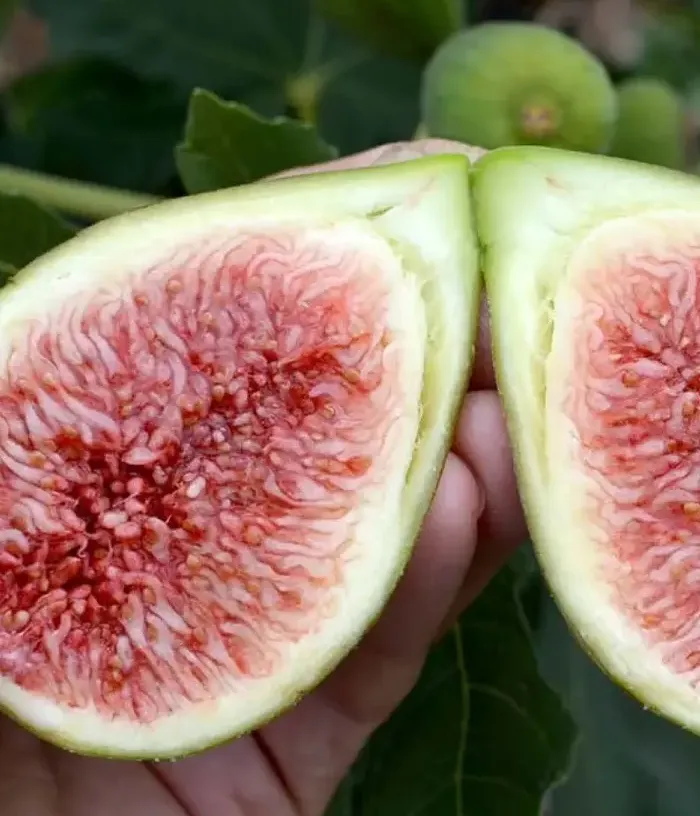
Fig Tree (Ficus carica) DALMATIE
New
Fig Tree (Ficus carica) DALMATIE
Specifications
Height at sale60-80cm
Pot2,5l
Sell as2 year old
Ripening timeSeptember/October
The standard delivery time for Germany is 3-5 working days.(except for goods "On request")
We send goods on Monday, Tuesday, Wednesday, by agreement also Thursday or Friday.
Price
39.00€
Ex Tax: 34.51€
  • Stock: In Stock
  • Model: Ficus carica

Common Fig - Variety 'Dalmatie'

'Dalmatie' is synonymous with large fruits and unprecedented toughness. This Adriatic beauty with highly decorative leaves belongs to the absolute top tier for growing in Central European conditions. Its greatest "superpower" is extreme moisture resistance – the huge fruits do not crack or rot even during rainy autumn days. Combined with its compact growth, it is an ideal choice for smaller gardens and container growing.


Common Fig (Ficus carica) 'Dalmatie'

The variety originates from Croatia, specifically from the island of Hvar (historically called Lesina). It is also known by the synonyms San Piero, Du Japon, or Blanche Navello. Note: Two different types are sometimes sold under the name "Dalmatie" in garden centers. This description refers exclusively to the true, green-fruited variety first described by botanist Trabut in 1904.

Main advantages of the variety:

  • Very large fruits: They reach a weight of up to 150 g and have an excellent, dense honey flavor.
  • Extreme rain resistance: Fruits do not crack in wet conditions; rain only makes them juicier.
  • High cold hardiness: Thanks to the rapid maturation of wood in summer, it handles winter exceptionally well.
  • Compact growth: A smaller tree, ideal for pots and small gardens.
  • High ornamental value: The huge, deeply lobed leaves look very decorative.
  • Self-fertility: The variety is parthenocarpic, it does not need a pollinator.
Detailed variety description: Plant
  • Growth and habit: Naturally compact, weaker, and shorter. The tree has a specific, somewhat "bare" (sparser) appearance. The branches branch out very little and carry fewer leaves.
  • Leaves: Although there are fewer of them, they are huge and very deeply lobed (resembling open palms). The tree is highly decorative thanks to them.
Fruits and flavor profile
  • 1st crop (Summer / Breba): Forms on last year's wood. The fruits are very large (120 – 150 g) with an elongated pear shape. However, they are extremely sensitive to spring temperature fluctuations, which cause them to drop.
  • 2nd crop (Main autumn): Forms on new shoots. The fruits are still large (100 – 120 g) and look almost inappropriately gigantic relative to the small tree.
  • Appearance and taste: The green-yellow skin hides a deep red, very dense, and sweet flesh. When the fig is perfectly ripe, a drop of sweet "honey" oozes from its "eye" (ostiole).
Growing characteristics and agrotechnics
  • Resistance and requirements:
    • Moisture resistance: The most valuable trait of the variety. If it rains before harvest, the fruits do not crack or rot; the flesh just becomes juicier.
    • Cold hardiness: Very high. Mature trees can withstand frosts down to -15 °C. It grows slower in spring, and in summer the wood matures and hardens quickly, perfectly preparing it for winter.
  • Agrotechnics and pruning (The secret to success):
    • Removing the summer crop: Since the main crop is late, it is recommended to manually remove the pea-sized summer fruits (breba). This step accelerates the ripening of the main autumn crop by 1 to 3 weeks.
    • Shoot control: It is necessary to regulate (break off) excess new shoots, as they drain the tree's energy and slow down fruit ripening.

Disadvantages of the variety:

  • Sensitive summer crop: Breba is prone to dropping during strong spring temperature fluctuations.
  • Late main crop: In cold areas, it requires the removal of summer fruits and shoot regulation to ripen in time.
  • "Bare" appearance: A sparsely branched tree with fewer leaves.
  • Skin color: The green-yellow color can be confusing for beginners when determining full ripeness.

Write a review

Note: HTML is not translated!
Rating
Bad Good
reCAPTCHA verification failed! Please try again.
Hurmi Kaki FUYU is one of Japan's large-fruited varieties, popular because the fruit can be eaten directly from the tree when ripe. In our country, it..
Price
39.00€
Ex Tax:34.51€
Add to Cart
Hurmi Kaki ROJO BRILLANTE is one of the Japanese large-fruited varieties, popular because the fruit is of the highest quality. In our country it can b..
Price
39.00€
Ex Tax:34.51€
Add to Cart