









Krymsk 86: The Russian Hybrid Titan Changing the Rules in Modern Orchards
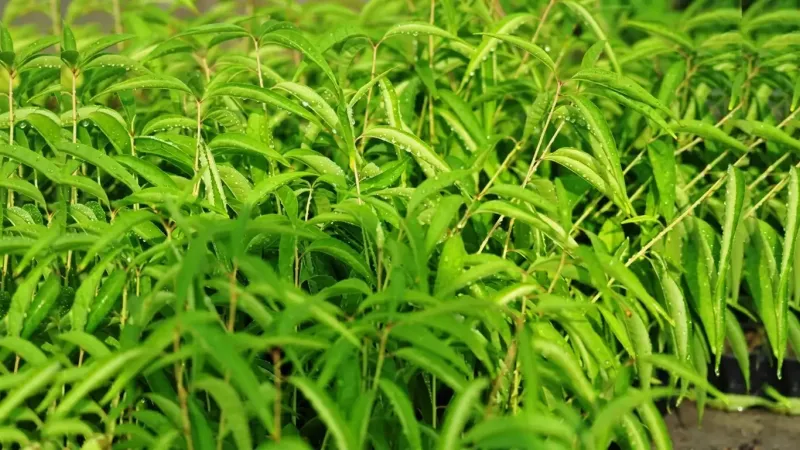
Krymsk 86: The Russian Hybrid Titan Changing the Rules in Modern Orchards
How one rootstock protects orchards against climate extremes – from devastating floods to scorching drought
Nature has not been kind to fruit growers in recent years. One season brings extreme spring rainfall that turns orchards into impassable lakes of mud; the next brings scorching drought that leaves the ground cracked. Under these conditions, the deciding factor is no longer just the variety grafted into the canopy, but above all the rootstock hidden underground. Choosing the right rootstock has become a question of survival for the entire orchard.
Imagine an orchard that can withstand a raging windstorm, survive weeks in mud after destructive floods and still deliver a top-quality crop of large, beautifully coloured fruit during drought. Sounds like a utopia? For modern fruit growers and almond producers, this vision has become reality thanks to one key element – the Krymsk 86 rootstock. This unique hybrid, the product of decades of Russian research, was bred to withstand the extremes under which traditional rootstocks fail. Today it is rewriting the pomology textbooks from sunny California through Murcia in Spain to Australia.
|
10,000+
Prunus genotypes in Prof. Eremin's collection
|
100%
tree survival after flooding in Chile
|
22.5 million
trees sold in California since 2011
|
20 years
a Russian peach orchard has thrived without irrigation
|
← Swipe the table sideways →
Born from Thousands of Crosses
The story of Krymsk 86 (also known as Kuban 86 or by its patent designation USPP#16,272) began at the Krymsk Experimental Breeding Station in Russia, founded as early as 1935. Over 60 years, Professor Dr. Gennady Eremin assembled more than 10,000 unique Prunus genotypes there. This rootstock was therefore no accident – it is the result of a targeted breeding programme with a clear brief: to create rootstocks adapted to hot, dry summers that would also cope with heavy, wet soils and bring early cropping (Maas, 2024; Gebr. Janssen).
The outcome of this ambitious programme is Krymsk 86 – an interspecific hybrid of peach and myrobalan plum (Prunus persica × Prunus cerasifera). The aim of the cross was to combine the best of both parents: a rootstock that tolerates hot, dry summers while also coping with heavy, wet soils and asphyxia, i.e. root suffocation caused by a lack of oxygen (Maas, 2024). This genetic mix has given it the traits that make it one of the most versatile rootstocks available today. It is fully compatible with peaches, nectarines, almonds, apricots and plums (Gebr. Janssen; Progressive Genetics Group) and is now saving harvests around the world.
Every Nursery's Dream: Effortless Propagation
Before a tree reaches the orchard, it has to pass through the hands of nursery growers – and this is where Krymsk 86 shows its first major advantage. A Dutch source (Gebr. Janssen) describes it as "boomkwekersvriendelijk", meaning exceptionally nursery-friendly.
A scientific study from the Agricultural University of Athens confirmed that Krymsk 86 is among the rootstocks that root exceptionally easily in vitro. The researchers achieved up to 100% rooting success in microshoots. Even more remarkably, this rootstock reaches a high rooting percentage (up to 80%) and good root length even in media with no synthetic auxins (growth hormones) added at all, provided a suitable carbon source such as fructose is available (Tsafouros and Roussos). This makes it an economically and technologically very attractive material for large-scale plant production.
| Best result achieved | up to 100% |
| Without synthetic auxins (carbon source: fructose) | up to 80% |
Values are shown on a 0–100% rooting success scale (Tsafouros and Roussos).
← Swipe sideways →
Master of Survival, Part One: The Water Test
Climate change is bringing extremes to orchards and gardens that older rootstocks simply cannot handle. One of the biggest fears of stone fruit and almond growers is "wet feet". Traditional peach rootstocks such as Lovell peach seedling or Nemaguard are extremely sensitive to waterlogging. When they stand in water, their roots quickly die from lack of oxygen or succumb to Phytophthora root rot.
Krymsk 86 was bred to tolerate heavy, wet soils in which other trees would be suffocated by asphyxia. Thanks to its myrobalan genes, it copes exceptionally well with oxygen shortage in the root zone and with heavy clay soils (Progressive Genetics Group; Gebr. Janssen).
Case study from Chile
The most convincing evidence of this resilience comes from Chile. An orchard of 4-year-old cherry plum trees went through an extreme event that unfolded in three phases:
The result was clear-cut. Trees grafted onto the standard Nemaguard rootstock died off on a massive scale. In contrast, the trees on Krymsk 86 in the same orchard survived this disaster with a 100% survival rate (Maas, 2024).
Even Krymsk 86 is not completely immune to stress from extreme waterlogging, although it can survive it. In heavy soils, during extreme spring rains or with excessive irrigation, young trees (particularly almonds of the Monterey variety) may develop a condition known as YCL (Yellow Cupped Leaves). The trees temporarily stop growing and their leaves turn yellow.
Unlike trees on other rootstocks, however, trees on Krymsk 86 usually recover during the growing season and resume healthy green growth. In this case, the advantage of survival and firm anchorage clearly outweighs the temporary slowdown in growth (Progressive Genetics Group).
Master of Survival, Part Two: Scorching Drought and Frost
Climate extremes do not only come in the form of water. At the other end of the climate spectrum lies the rootstock's drought tolerance – from the very beginning, Krymsk 86 was also bred for adaptation to hot, dry summers (Maas, 2024). Compared with common peach rootstocks, it tolerates drought far better, as repeatedly confirmed by experience in its home country (Progressive Genetics Group; Gebr. Janssen).
An extreme example of Krymsk 86's ability to manage water is a 20-year-old peach orchard in Russia grown on this rootstock entirely without supplementary irrigation. The trees nevertheless thrive and bear fruit (Maas, 2024).
Beyond summer extremes, the rootstock is ready for winter ones too. Based on long-term experience in harsh Russian conditions, Krymsk 86 is classified as fully winter-hardy, making it suitable for all major growing regions (Gebr. Janssen; Progressive Genetics Group).
Anchored in the Ground: Why California Loves It
In California, the world's centre of almond production, more than 22.5 million trees on Krymsk 86 have been sold since 2011 (Maas, 2024). The reason is its outstanding anchorage in the soil.
The root system of Krymsk 86 spreads very widely, and the individual roots have exceptionally high tensile strength. Unlike Lovell, whose roots are brittle and lack lateral spread, Krymsk 86 holds the tree in the ground like a vice (Progressive Genetics Group). It proved its strength in October 2009 in Butte County, California, when severe storms uprooted or tilted many young almond trees on Lovell, while trees on Krymsk 86 remained firmly upright (Progressive Genetics Group; Maas, 2024).
While the storm in Butte County was toppling young almond trees on Lovell, the trees on Krymsk 86 stood firm as if anchored.
Krymsk 86 compared with traditional rootstocks
| Trait | Krymsk 86 | Nemaguard | Lovell |
|---|---|---|---|
| Type | peach × myrobalan hybrid | peach rootstock | peach seedling |
| Waterlogging, heavy soils | high tolerance, 100% survival in Chile | sensitive, massive losses in Chile | sensitive |
| Drought | far better tolerance than common peach rootstocks | weaker than Krymsk 86 | weaker than Krymsk 86 |
| Anchorage | wide-spreading root system, high root tensile strength | not stated | brittle roots lacking lateral spread |
| Vigour | semi-dwarfing | vigorous | not stated |
| Nematodes | highly susceptible (California trials) | not stated | not stated |
| Salinity | highly sensitive to sodium, chloride and boron | not stated | not stated |
← Swipe the table sideways →
"Not stated" means the sources this article draws on do not report this trait for the given rootstock.
Effect on the Crop: Less Pruning, Better-Looking Fruit
Krymsk 86 is not only about survival but also about the quality of production. Two independent trials on two continents produced similar results.
Achilles' Heel: When Krymsk 86 Fails
For the picture to be complete, we also need to talk about what this rootstock cannot handle. No rootstock is perfect, and knowing its limits is critical for success in the orchard. Although Krymsk 86 excels in the battle against water and drought, there are soil extremes it cannot cope with.
Nematodes and bacterial canker
Although some European sources report nematode resistance (Gebr. Janssen), extensive field trials in California from 1997–2006 showed the exact opposite. Experts from the University of California warn that Krymsk 86 is highly susceptible to nematodes (Duncan et al., 2016; Progressive Genetics Group).
In addition, the presence of ring nematodes makes it susceptible to bacterial canker (Duncan et al., 2016; Progressive Genetics Group).
Saline and sandy soils
Another major limitation is salt toxicity. When drought is combined with saline soil or irrigation water with a high salt content, this rootstock fails. Extensive trials in California showed that Krymsk 86 is highly sensitive to sodium, chloride and boron. It accumulates these toxic ions at elevated levels, leading to leaf damage, poor yields up to a rapid decline in yield, and damage to the trees. It also grows poorly in light, sandy soils, especially where nematodes are present (Duncan et al., 2016; Progressive Genetics Group).
European and Californian sources disagree on nematodes. The Californian results come from extensive multi-year field trials, so it is sensible to assume susceptibility. If you are planning to plant on Krymsk 86, it is worth checking your soil for nematodes and testing both soil and irrigation water for salts beforehand.
Suitable: heavy clay soils and a risk of spring flooding or waterlogging
Suitable: sites with summer drought and limited irrigation
Suitable: windy sites where firm tree anchorage is decisive
Suitable: regions with frosty winters
With caution: young trees during extreme spring rains or excessive irrigation (risk of YCL)
Unsuitable: soils infested with nematodes
Unsuitable: saline soils and irrigation water high in sodium, chloride or boron
Unsuitable: light, sandy soils
Overview: what trials and practice have confirmed
| Location | Crop / material | Key finding | Source |
|---|---|---|---|
| Athens, Greece (laboratory) | microshoots in vitro | rooting up to 100%, up to 80% without synthetic auxins | Tsafouros and Roussos |
| Chile | 4-year-old cherry plum trees | 100% survival after flooding, massive losses on Nemaguard | Maas, 2024 |
| Russia | 20-year-old peach orchard | thrives and crops without supplementary irrigation | Maas, 2024 |
| Butte County, California (2009) | young almond trees | stayed upright after storms, trees on Lovell were uprooted or tilted | Progressive Genetics Group; Maas, 2024 |
| Tatura, Australia | peach 'September Sun', nectarine 'Rose Bright' | semi-dwarfing growth, better red colour, comparable yield and °Brix | O'Connell |
| Murcia, Spain | apricot 'E-101' | highest fruit weight and highest red colouration (a*) | Hernández et al., 2010 |
| California (1997–2006) | rootstock field trials | high nematode susceptibility, sensitivity to sodium, chloride and boron | Duncan et al., 2016 |
← Swipe the table sideways →
Conclusion: A Life Insurance Policy Hidden Underground
In an era of unpredictable climate change, growers can no longer rely on favourable weather alone. They need orchards that are resilient from the ground up – and the Krymsk 86 rootstock provides exactly that foundation. It is not a cure-all for every problem in fruit growing, but used in the right conditions it is an extremely powerful tool.
If you have sandy soil full of nematodes and saline water, this rootstock will disappoint you. But if you are battling heavy clay soils, the threat of spring flooding, summer drought or strong winds, Krymsk 86 is a game changer. Its ability to survive devastating floods, tolerate heavy soils and still thrive through long dry spells makes it one of the most valuable tools in modern fruit growing. It gives trees unprecedented stability, reduces pruning requirements and rewards the grower with large, beautifully coloured fruit. If your orchard does not suffer from salinity or nematodes, Krymsk 86 is not just a choice of rootstock – it is quite literally a life insurance policy for your trees, safely hidden beneath the soil surface.
The Russian hybrid titan proves that the future of successful fruit growing lies firmly underground – in the right choice of rootstock.
|
Trees for Tough Conditions
Heavy soil, wet springs or dry summers? Browse our peaches, nectarines, apricots, plums and almonds and choose varieties for an orchard that is resilient from root to crown. Visit the shop → |
Join Our Growers' Community
Share your growing experience, ask about varieties and show off your harvest on our Facebook page full of enthusiastic fruit growers – talk with experts and be the first to read our new articles. Follow us on Facebook → |