









Climate-Matched Genetics: How to Choose Fruit Varieties That Truly Thrive in Our Conditions
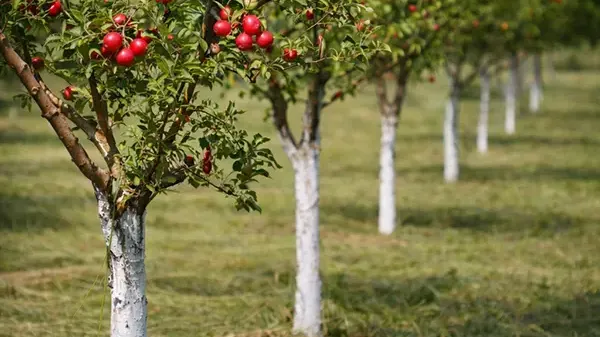
Genetics in Tune with Climate
Why do standard Western European genotypes so often hit their limits in our conditions, and where can we find real biological plasticity?
When establishing new plantings, we often meet the same puzzle: a variety that looks outstanding on paper in Western or Southern European catalogues shows below-average vitality in practice in Slovakia and the Czech Republic, along with chronic tissue damage, unprofitable fruit set and high susceptibility to pathogens.
The cause is not the quality of the plant material itself, but ecophysiological incompatibility. Slovakia and the Czech Republic lie in a transitional, highly dynamic zone where Atlantic oceanic influence meets Eurasian continental influence and the local orography of the Carpathian and Bohemian massifs.
Western and south-western Europe benefit from a balanced maritime climate with the high heat capacity of the ocean: the transition from winter to spring is gradual, day-to-night temperature swings are small and frost periods are smooth. Our reality is defined by extreme variability and abiotic stress (stress caused by non-living factors such as frost, drought or heat). If we want to know which genotypes have a real future here without constant technological “life support”, we need to look at regions with the same climatic matrix – that is, at the breeding programmes of Romania, Ukraine, the Baltic states, Belarus and Russia.
3 climatic parallels to our regions | 5 breeding regions of origin of hardy genetics | 3 lines of commercial breeding | 20–40 years of breeding per variety in state institutes |
Climatic Parallels and Physiological Adaptations of Eastern and North-Eastern Genetics
The success of genotypes from these regions in our territory does not lie in some miraculous hardiness, but in the fact that the selection pressure where they originated mirrors exactly the limiting factors of our specific regions.
The three parallels at a glance
| Region of origin | Equivalent in our country | Main limiting factor | Key traits of the genetics |
|---|---|---|---|
| Romania, southern Ukraine | Warm lowlands and the south (Danubian and East Slovak Lowlands, southern Moravia) | Summer drought, high evaporation, winter temperature instability | Deep endodormancy, efficient stomatal regulation, thick cuticle |
| Baltic states | Submontane areas, inversion valleys, higher elevations | Damp cold, short growing season, alternating thaw and frost | Fast ripening of wood, resistance to fungal and bacterial diseases |
| Belarus, northern Ukraine, Russia | Frost pockets and areas hit by Arctic air | Continental frosts, late spring frosts | Cryoprotectants in cells, tolerant flowers, staged bloom |
← Swipe the table sideways →
State Research vs. Commercial Breeding: Two Different Biological and Economic Worlds
To understand why different varieties behave so differently in gardens and orchards, we have to look at the method and purpose of their breeding. Most of the eastern and north-eastern genetics mentioned above came from state research institutes, while the Western market is today driven mainly by private commercial consortia and licensing clubs.
Both systems produce top-quality genetics, but each solves a different equation – and even within the commercial sector there are fundamental differences.
1. Commercial (Corporate) Breeding: Three Lines – “Supermarket”, “Fresh Market” and “Industry”
A private breeding programme is an extremely capital-intensive model whose return depends on selling licences to professional growers. Today’s commercial breeding therefore divides its genetics into three strictly specialised lines:
2. State Breeding Programmes: Optimised for Ecological Plasticity, Autonomy and Bioactive Processing
State research stations in eastern and north-eastern Europe (as well as the historical state breeding in our region) worked in a completely different mode. Their strategic mission was not only a product for ideal conditions, but food security, zoning (assigning varieties to suitable growing regions), especially marginal ones, population health and long-term yield stability at low inputs.
Interspecific hybridisation and polygenic resistance. Because state institutes had huge gene-bank collections and time horizons of 20 to 40 years per variety, they could bring native botanical and wild species into breeding. The result is horizontal (polygenic) resistance – tolerance of frost, drought and diseases is not tied to a single gene but to a complex of dozens of minor genes. A pathogen cannot simply overcome such resistance, and the plant can keep its immunity for decades without intensive chemical protection.
Ecological plasticity and regeneration. Varieties were tested in real field conditions without irrigation and with minimal cultivation. Only individuals with high regenerative capacity (fast healing of wounds and frost damage to cambial tissues) and the ability to yield even in years with unfavourable weather went on to the next selection stage.
Traits for fresh eating and self-sufficiency. The fruit often has thinner skin and delicate flesh (which rules it out of long-distance transport but offers top quality when picked from the tree), and many varieties ripen in stages. For a commercial orchard, gradual ripening over two to three weeks is a cost brake; for a home gardener it is a great advantage – a steady supply of fresh fruit.
Processing varieties: the nutritional and craft dimension. State institutes also bred technical processing varieties on a large scale (and adapted many of them to harvesting machines), but their primary goal was not cheap biomass to be diluted with water. Given their geographical position (long winters with a lack of fresh vitamins), breeders were tasked with creating functional foods of exceptionally high nutrient density. Selection of processing and multi-purpose varieties was therefore deliberately driven towards the highest concentration of biologically active substances: vitamin C (ascorbic acid), P-active substances (rutin, catechins), anthocyanins, carotenoids, organic acids and specific pectins that bind heavy metals.
Advantages for home and craft processing
Thanks to a high total dry-matter content (the solid share of the flesh), a dense cell structure and a strong aromatic profile, these varieties are unmatched in traditional and craft processing:
| Processing method | What these varieties offer |
|---|---|
| Drying | They keep their shape and colour and oxidise less quickly. |
| Freezing | After thawing they do not fall apart into water, thanks to firmer cell walls and a higher content of bound pectins. |
| Fermentation (fruit wines, ciders, ferments, vinegars), jams and syrups | A complex, full flavour profile, intense natural colour and natural preservatives (tannins and acids), which are often missing in Western varieties. |
← Swipe the table sideways →
Commercial and state breeding side by side
| Criterion | Commercial breeding | State breeding |
|---|---|---|
| Main goal | Return on licence sales; fruit for the retail chain, the fresh market or industry | Food security, zoning into marginal areas, population health, stable yields at low inputs |
| Growing conditions | Intensive, technologically managed system (irrigation, fertigation, protection from sun and hail, crop-load regulation) | Real field conditions without irrigation and with minimal cultivation |
| Disease resistance | Often vertical (monogenic), which a local pathogen can overcome over time | Horizontal (polygenic) – a complex of dozens of minor genes |
| Frost and drought tolerance | Often suppressed in the genetics | Selected through harsh field testing; high regenerative capacity |
| Fruit | Fresh Market: world peak in taste, size and looks; retail chains: durability and uniformity | Often thinner skin and delicate flesh, staged ripening, top quality when picked from the tree |
| Processing | Industrial lines: mechanised harvest, juice yield, high °Brix, specific pectins, low polyphenol oxidase activity | High nutrient density; ideal for drying, freezing, fermentation, jams and syrups |
← Swipe the table sideways →
So Where Do the Two Worlds Meet in Our Plantings?
The split into “eastern state” and “western commercial” breeding is not a battle of good against evil, but a question of matching genetics to the grower’s goal and the site:
| Commercial Fresh Market varieties are a great choice for a grower in a more favourable location who wants top dessert quality, fruit size and attractiveness for fresh eating – and is ready to give the plant above-standard cultivation support (irrigation, nutrition, targeted protection, fruit thinning). | |
| Genetics from state programmes in Romania, the Baltic states, Ukraine, Belarus and Russia are an irreplaceable foundation wherever climate and nature call the shots – in frost pockets, in dry lowlands without irrigation or in damp foothills. They are also the first choice for anyone who expects biological independence from a tree and minimal chemical protection, and who wants fruit not only for eating straight from the tree but also as a raw material of high biological and sensory value for home or craft processing. | |
| A mixed approach Both worlds can be combined on one plot – for example, dessert varieties in the most favourable spots and hardier genetics where the climate is harsher. | |
| Warning sign A variety that is top on paper but has no cultivation support in a climate it was not bred for is the quickest route to weak vitality, damaged tissues and poor fruit set. |
True fruit-growing art in our conditions today lies in knowing how to combine these worlds sensibly, exactly according to the limits of your own plot and what you expect from the harvest in the kitchen or the cellar.
Varieties for our climate Browse the varieties in our shop and choose those that suit your site – whether it is a frost pocket, a dry lowland or a damp foothill. Find the genetics that will thrive in your garden. Go to the shop | Join us on Facebook Exchange growing experience, ask about varieties and share your harvest on our Facebook page, a community of enthusiastic fruit growers – talk with experts and be the first to get access to new articles. Visit our Facebook page |