









Why Cooking and Preserving Benefits Tomatoes, Carrots and Apricots
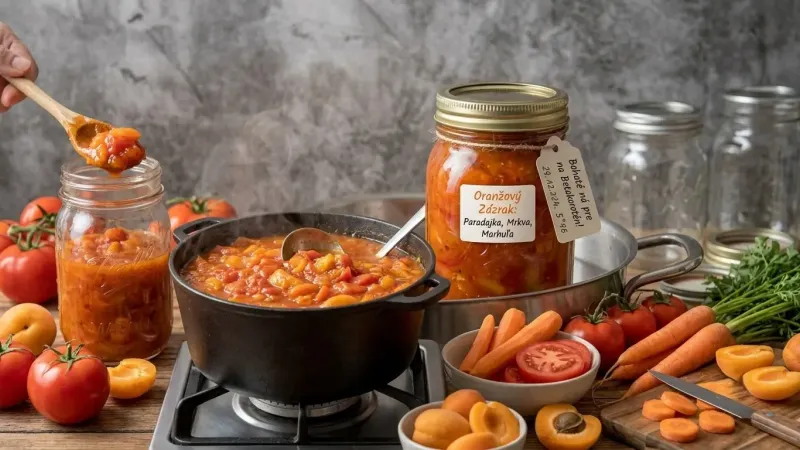
The Orange Miracle in the Pot
Why cooking and preserving does tomatoes, carrots and apricots so much good
The myth that raw fruit and vegetables are always the healthiest choice is deeply rooted in our thinking. The idea that any heat inevitably destroys every valuable nutrient often discourages us from traditional home processing. Yet science shows that nature has its exceptions. There is a group of exceptionally powerful antioxidants for which the heat of a pot or a canning jar is literally the key to unlocking their full potential.
Meet the carotenoids – the orange, red and yellow miracle that turns homemade ketchup, tomato purée or preserved apricots into a genuine health elixir. Carotenoids include the well-known lycopene, beta-carotene and lutein. They are the pigments responsible for the vivid colours of many fruits and vegetables, and the scientific literature values them highly for their antioxidant properties, their ability to protect eyesight, reduce the risk of cardiovascular disease and help prevent certain types of cancer. While vitamin C really does suffer during cooking, carotenoids behave in exactly the opposite way.
|
72.4%
of carotenoids remain in boiled carrots
|
100 °C
boiling tomatoes does not harm lycopene
|
cis
the more absorbable form is created by heat
|
The science behind the stove: how heat unlocks health
To understand why cooking and preserving benefit carotenoids, we have to look at the plant cell on a microscopic level. In their raw state these valuable compounds are firmly trapped within cell structures – the so-called chromoplasts – and bound to complex plant matrices. Our digestive tract often struggles to break these firm structures down, which means much of the antioxidant content of raw carrots or tomatoes passes through the body without being absorbed.
Heat treatment – boiling, stewing or the sterilisation used in canning – acts as a key. Heat disrupts the cell walls and breaks down the food matrix, releasing these compounds and making them far more available to the body.
Even more interesting is the chemical change at the molecular level. In raw produce, carotenoids (such as lycopene in tomatoes) occur mainly in the so-called trans-isomer form, which has a linear, straight shape. During heat treatment this shifts to the cis-isomer form, which is bent. Scientific studies confirm that this cis form, although chemically less stable, is far more bioavailable and more easily absorbed by the human body. The extent of this conversion is directly linked to the degree of heat treatment.
Cooking and preserving orange and red produce is not the destruction of vitamins – it is alchemy that unlocks their true power.
Tomatoes: kings of home processing
The undisputed winner of this heat paradox is the tomato and its main antioxidant – lycopene. Research shows that processed tomato products have higher antioxidant activity than fresh tomatoes, precisely because of the increased release of bound phenolic compounds and lycopene from the matrix.
Making homemade tomato purée, passata, ketchup or a pepper-and-tomato stew is nutritionally the best thing you can do with a tomato harvest. Boiling at 100 °C for 4, 8 or even 16 minutes has no negative effect on lycopene content; on the contrary, it improves its availability. If you peel and sieve the tomatoes before cooking, you obtain a concentrated dose of health.
How many carotenoids survive by method
Values are expressed against a range of 0 – 100% of the original content.
| Boiled carrots – beta-carotene | 89% |
| Boiled carrots – total carotenoids | 72.4% |
| Roasted tomatoes at 145 °C – lycopene | 36% |
← Swipe sideways →
Carrots, squash and sweet potatoes: beta-carotene in action
Beta-carotene, a precursor of vitamin A, is another star that loves heat. It is found mainly in carrots, squash and sweet potatoes. In home processing of carrots, ordinary boiling in water – about 21 minutes – proved to be one of the best cooking methods. It retains up to 72.4% of the total carotenoids, an even better result than pressure cooking or steaming.
An interesting culinary trick, also confirmed by science, is adding spices with antioxidant properties directly to the water in which you cook the vegetables. Adding turmeric or onion powder to boiling water favourably affects and increases the retention of beta-carotene in cooked carrots.
| Produce | Main carotenoid | Recommended method |
|---|---|---|
| Tomato | Lycopene | Boiling, passata, ketchup, stew |
| Carrot | Beta-carotene | Boiling in water (~21 min) |
| Squash and sweet potato | Beta-carotene | Boiling, stewing, mash |
| Apricot and peach | Beta-carotene | Canning, compote, thick jam |
← Swipe the table sideways →
Fruit: apricots and mango in the canning jar
This phenomenon is not limited to vegetables. Tropical fruit such as mango, but also our traditional apricots and peaches, contain plenty of beta-carotene and other carotenoids. Canning apricots or peaches into compotes and cooking thick jams is an excellent way to preserve them. Although canning may cause slight losses of other vitamins, the carotenoids remain stable and, thanks to the heat disrupting the fruit's structure, become easier to absorb.
The golden rule of processing: don't forget the fat
Carotenoids are fat-soluble (lipophilic) compounds. Without the presence of fat, the body cannot efficiently absorb them or convert them into vitamin A, for example. So always add a good-quality fat to every tomato purée, carrot soup or squash mash – a drop of olive oil, a knob of butter or a little cream. It is the fat that lets the released lycopene and beta-carotene move from the digestive tract into the bloodstream.
What to watch out for: when heat does harm
Although cooking and preserving benefit carotenoids, not every heat treatment is ideal. The overview below shows what helps and what, on the contrary, does harm.
| Boiling in water (100 °C) – favourable; it releases carotenoids from cell structures and increases their availability. |
| Excessive cutting and air exposure – grated carrot left in the air for three hours loses more carotenoids to oxidation than cooking itself. Cut just before processing. |
| Roasting at high temperature (145 °C) – destructive; it retains only around 36% of the lycopene. |
High roasting temperatures and long exposure of chopped vegetables to the air work against you. Favour boiling in water and process the vegetables as soon as possible after cutting.
Conclusion
Modern science's findings on how carotenoids behave are a great rehabilitation of traditional home food processing. The hours spent at the stove cooking homemade ketchup, sieving tomatoes for winter sauces or canning apricot compotes are not merely an effort to preserve the harvest – they are a sophisticated process by which, often unwittingly, we raise the biological value of our food.
So the next time you open a jar of your own tomato purée in winter, you can be sure that you are giving your body not just a memory of summer, but a highly usable dose of antioxidants that would be very hard to get from a raw tomato.
|
Grow your own apricots and peaches
Do you want to enjoy jars full of beta-carotene every winter? In our online store, you’ll find tried-and-true varieties of apricots, peaches, and other fruits that are perfect for canning, compotes, and thick jams. Browse varieties → |
Join fellow growers
Share your growing experience, ask about varieties and show off your harvest on our Facebook page full of enthusiastic fruit growers, discuss with experts and get early access to new articles. Visit the page → |