Cart

Pear (pyrus communis) ZIMŇAJA MLIJEVSKAJA
Pear (pyrus communis) ZIMŇAJA MLIJEVSKAJA
New
Pear (pyrus communis) ZIMŇAJA MLIJEVSKAJA
Specifications
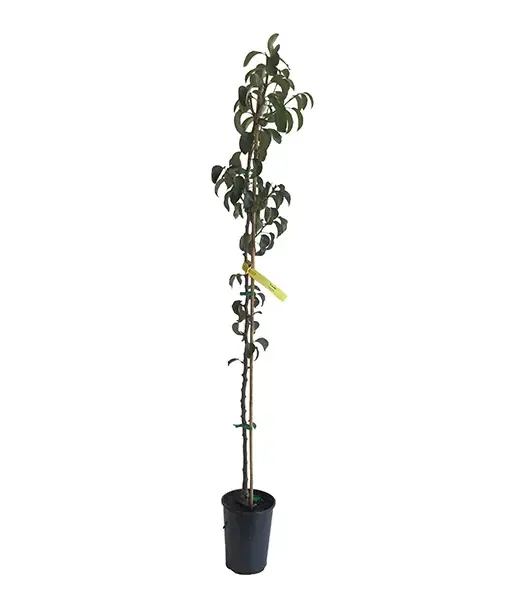
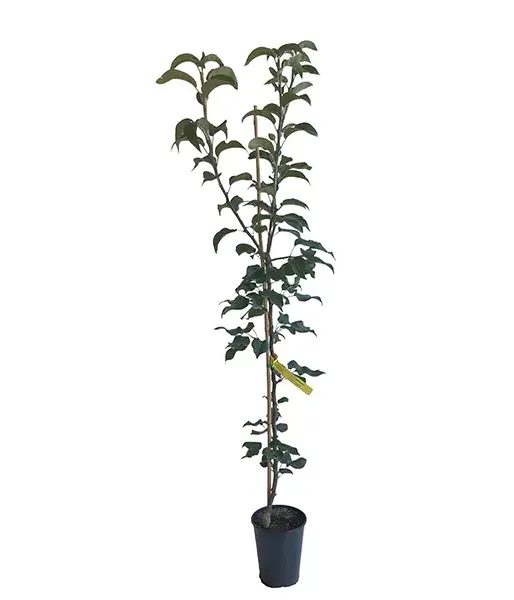
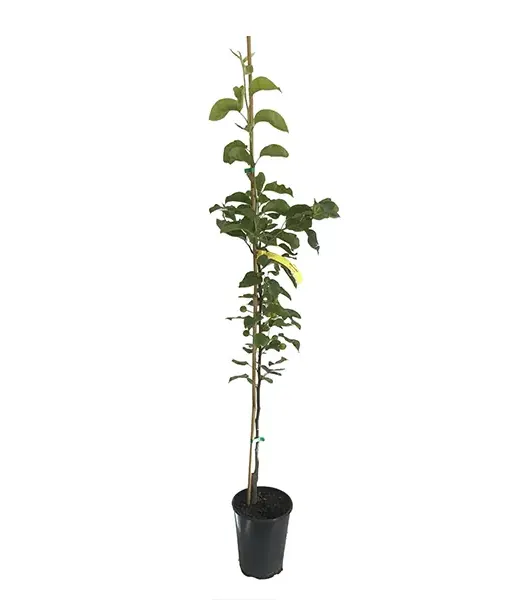
Height at sale160cm
Pot5l
Rootstock Pyrus communis var. caucasica
Ripening timeSeptember/October
The standard delivery time for Germany is 3-5 working days.(except for goods "On request")
We send goods on Monday, Tuesday, Wednesday, by agreement also Thursday or Friday.
Price
39.90€
Ex Tax: 35.31€
  • Stock: In Stock
  • Model: Pyrus communis

Pear (Pyrus communis) - Variety 'Zimnjaja Mlijevskaja' (Зимняя Млиевская)

'Zimnjaja Mlijevskaja' is a historically significant and highly reliable late winter variety of Ukrainian breeding. It is prized primarily for its extreme storability, excellent frost resistance, and stable, annual yields.


Pear (Pyrus communis) 'Zimnjaja Mlijevskaja'

It is an ideal choice for gardeners looking for an undemanding tree capable of providing fruit that lasts in the cellar in perfect condition until late spring.

Main advantages of the variety:

  • Extremely long storability (5-6 months, until May).
  • High frost resistance (suitable for cold areas).
  • High resistance to scab.
  • High and annual yield (without alternate bearing).
  • Partially self-fertile.
  • Large fruits of good dessert quality.
Origin and Breeding
  • Origin: Ukraine. The variety has a rich history – it was created back in 1934 at the L. P. Simirenko Research Institute of Horticulture of the Forest-Steppe of Ukraine (Mliiv Institute).
  • Breeders: I. Kh. Shidenko, A. R. Skazka, A. A. Kucher, A. M. Ro.
  • Genetics (Crossing): Created by a targeted cross of the varieties 'Alexandrovka' and 'Doyenné du Comice'.
  • Registration: It was entered into state variety trials in 1969 and officially registered (regionalized) in 1991.
  • Interesting fact: Parallel to this winter variety, breeders also created its summer "sister" named 'Rannjaja Mlijevskaja' (Early Mliiv), which has similarly good cultivation properties.
Detailed variety description: Plant
  • Vigor: The tree is strong-growing (vigorous).
  • Crown: Forms a broadly pyramidal crown of medium density.
  • Fruiting type: The variety has a mixed fruiting type – it sets flower buds on short fruiting spurs as well as on longer fruiting shoots.
Fruits and Flavor Profile
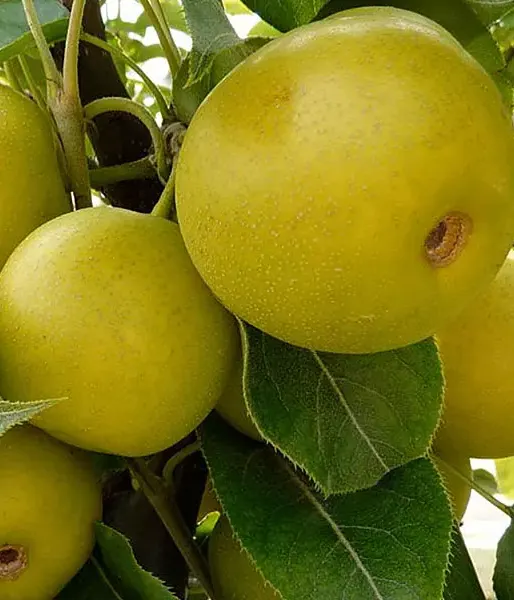
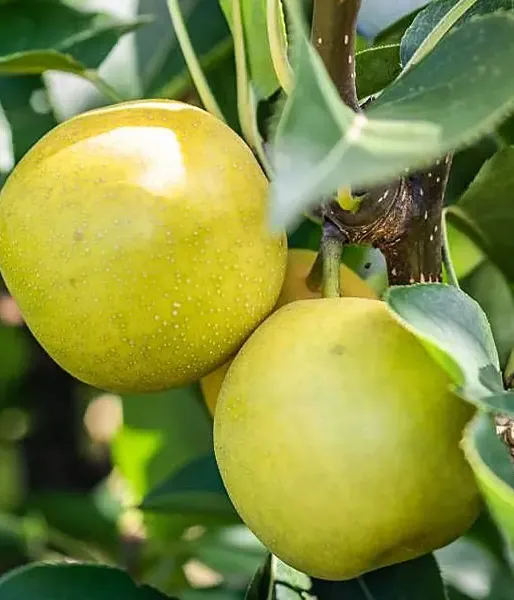
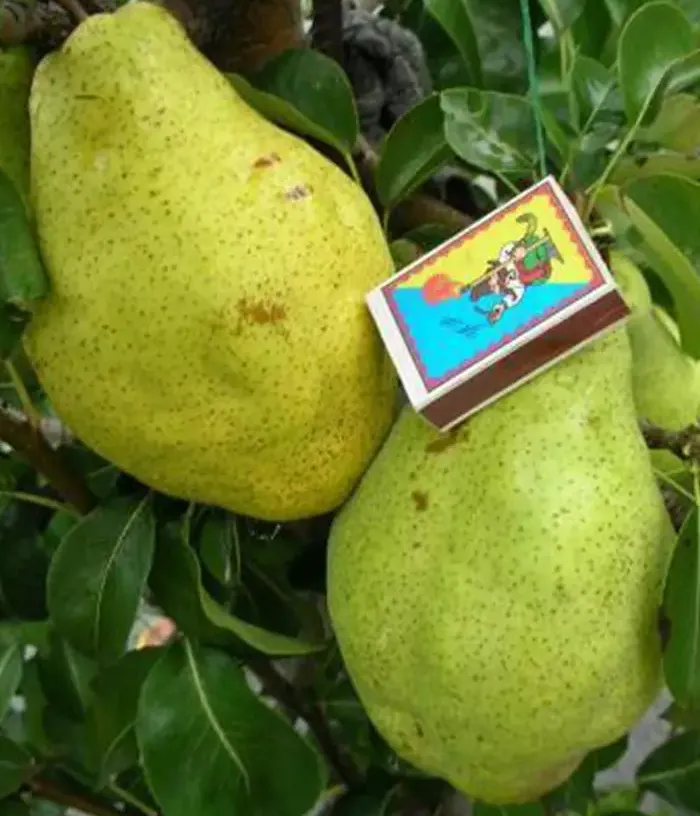
  • Appearance and size: The fruits are large. The average weight is 150 – 160 g, but with good agrotechnics they commonly reach 180 – 200 g (max. up to 220 g). They have an elongated, broad-pyriform shape and their surface is characteristically slightly bumpy.
  • Fruit morphology: The cavity at the stem (funnel) is completely absent. The calyx basin is broad, shallow, and ribbed. The stem is medium-long, thickened at the end, slightly curved, and inserted obliquely.
  • Skin: It is smooth, slightly "greasy" to the touch. The base color is yellow-green. A typical feature is a multitude of tiny russet dots, which often merge into subcutaneous spots. A faint red blush forms on the sunny side.
  • Flesh: It is yellow-white, fine-grained, soft, and very juicy.
  • Taste: Rated as good table quality (tasting score 4.3 out of 5). The taste is sweet with a pleasant, refreshing acidity. In very unfavorable (cold) years, mild acidity may appear in the taste.
Cultivation properties and agrotechnics
  • Ripening and storage (Key feature):
    • Harvest time: It is a late winter variety. Fruits are harvested in September to early October.
    • Consumption maturity: Fruits straight from the tree are not suitable for consumption. They must "condition" in storage. They reach their ideal taste no earlier than late December.
    • Storability: Excellent. Under good conditions, fruits last without loss of quality for 5 to 6 months (until April or May), while their flavor properties only improve with storage.
  • Yield and pollination:
    • Onset of fruiting: Usually begins to bear in the 3rd-5th year after planting.
    • Yield: It is high and, above all, annual. The variety does not suffer from alternate bearing (periodicity) and stably produces 40 to 70 kg of fruit from a mature tree.
    • Pollination: The variety is partially self-fertile, which guarantees a certain yield even without the presence of another pear. For maximum yields, however, the presence of another pollinator blooming at the same time is recommended.
  • Resistance and requirements:
    • Frost resistance: Elevated to very high (reported resistance down to -35 °C). Because of this, the variety is also suitable for colder regions.
    • Diseases: Characterized by high resistance to pear scab. On the other hand, it is moderately susceptible to Septoria leaf spot, which may require bio/chemical protection in wet years.

Drawbacks of the variety:

  • Moderate susceptibility to Septoria leaf spot.
  • Strong, vigorous growth (requires more space).
  • In very unfavorable (cold) years, acidity may appear in the taste.
  • Visually less attractive skin (bumpy, with russet spots).

Write a review

Note: HTML is not translated!
Rating
Bad Good
reCAPTCHA verification failed! Please try again.
The HAYATAMA pear is a Japanese pear variety that originates from Wakayama prefecture in southern Japan. The HAYATAMA pear is a medium-sized tree wi..
Price
29.00€
Ex Tax:25.66€
Add to Cart
The Hosui pear, also known as the Japanese pear, is a popular pear variety grown in Japan and other parts of the world. Hosui is a medium-sized tree t..
Price
29.00€
Ex Tax:25.66€
Add to Cart
The Japanese pear variety Nijisseiki, also known as Niitaka pear, is one of the popular cultivars of Japanese pears. This variety originates from Japa..
Price
29.00€
Ex Tax:25.66€
Add to Cart
The Japanese pear variety SHINSEIKI is one of the popular cultivars of Japanese pears. It originates from Japan and is highly regarded for its excelle..
Price
29.00€
Ex Tax:25.66€
Add to Cart