Cart

Pear (pyrus communis) PLATONOVSKAJA
Pear (pyrus communis) PLATONOVSKAJA
New
Pear (pyrus communis) PLATONOVSKAJA
Specifications
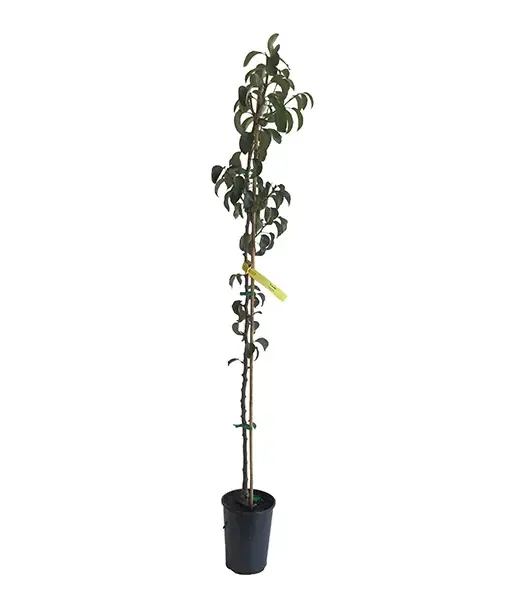
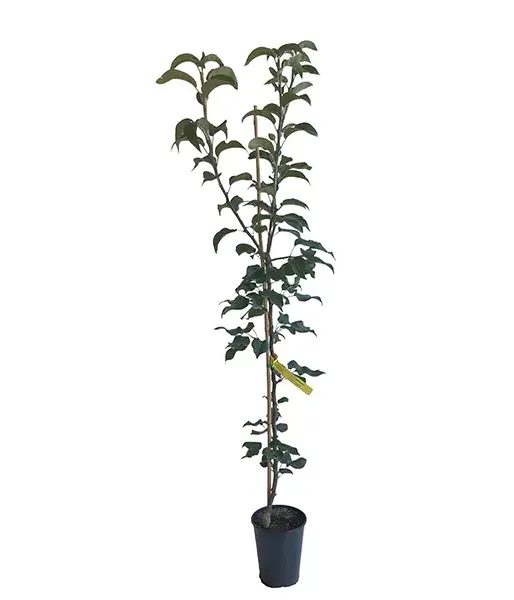
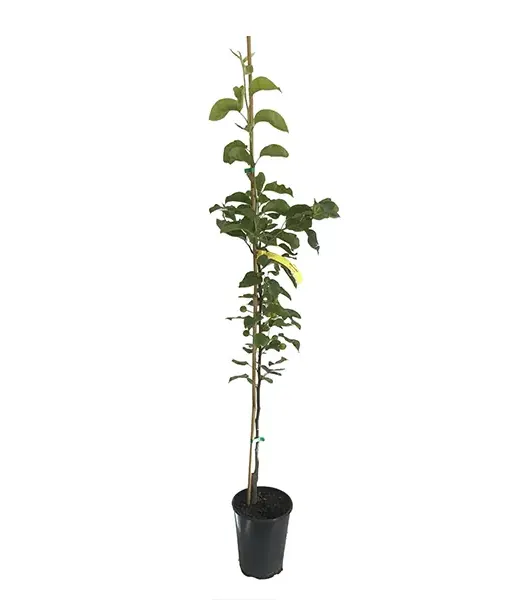
Height at sale160cm
Pot5l
Rootstock Pyrus communis var. caucasica
Ripening timeSeptember
The standard delivery time for Germany is 3-5 working days.(except for goods "On request")
We send goods on Monday, Tuesday, Wednesday, by agreement also Thursday or Friday.
Price
39.90€
Ex Tax: 35.31€
  • Stock: In Stock
  • Model: Pyrus communis

Pear (Pyrus communis) - Variety 'Platonovskaja' (Платоновская)

'Platonovskaja' is an excellent late autumn (to early winter) variety of Ukrainian breeding, representing an ideal compromise between low-maintenance cultivation and top-quality fruit. It is a robust, highly frost-resistant tree that easily withstands diseases and annually produces a rich harvest of large, buttery pears.


Pear (Pyrus communis) 'Platonovskaja'

Thanks to these properties, it is extremely popular not only among experienced orchardists but is also highly recommended for beginner gardeners.

Main advantages of the variety:

  • Excellent, distinctly sweet taste with buttery flesh (high tasting scores).
  • Large and uniform fruits (even with high yields).
  • High frost resistance and overall undemanding cultivation.
  • Top resistance to scab and fungal diseases.
  • Early onset of fruiting and stable, high yields.
  • Partially self-fertile.
  • Versatile use (excellent fresh as well as for processing).
Origin and Breeding
  • Origin: Ukraine. The variety was bred at the L. P. Simirenko Institute of Pomology (Mliiv Institute).
  • Registration: It was entered into the Ukrainian state register of varieties in 2007 (recommended for the Forest-Steppe zone).
Detailed variety description: Plant
  • Vigor: The tree is of medium to strong vigor (depending on the rootstock, it grows to 2 - 2.5 m, or more on vigorous rootstocks).
  • Crown: In its youth, the crown has a strictly pyramidal shape. Upon reaching full fruiting, under the weight of the fruits, it changes to a broad-pyramidal or broad-spherical shape, with branches tending to droop slightly. The crown is of medium density.
  • Blooming: Blooms in the mid-season with large, fragrant flowers. It sets flower buds mainly on short fruiting spurs.
Fruits and Flavor Profile (Key feature)
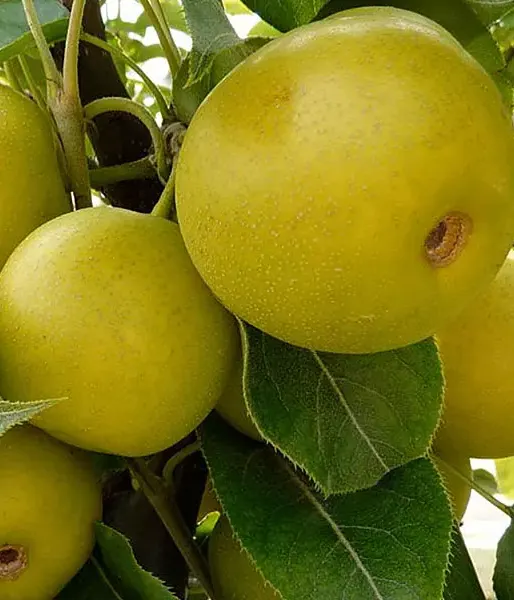
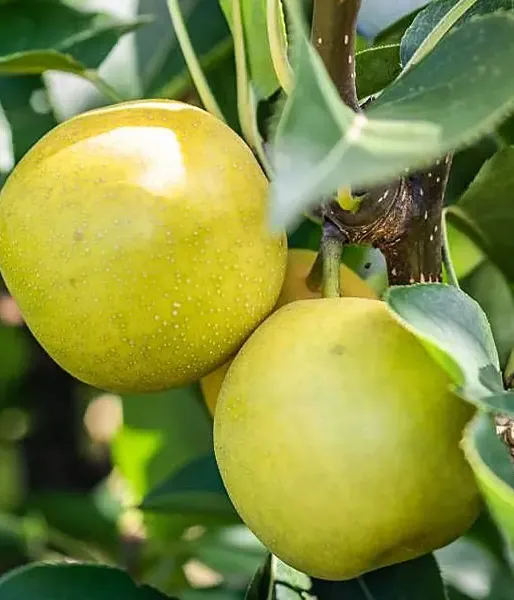
  • Appearance and size: The fruits are large to very large. The average weight is 190 – 230 g, but on young trees they commonly reach 240 – 260 g (max. up to 300 g). A huge advantage is that the fruits are uniform in shape and size even when the tree is heavily overloaded with crop.
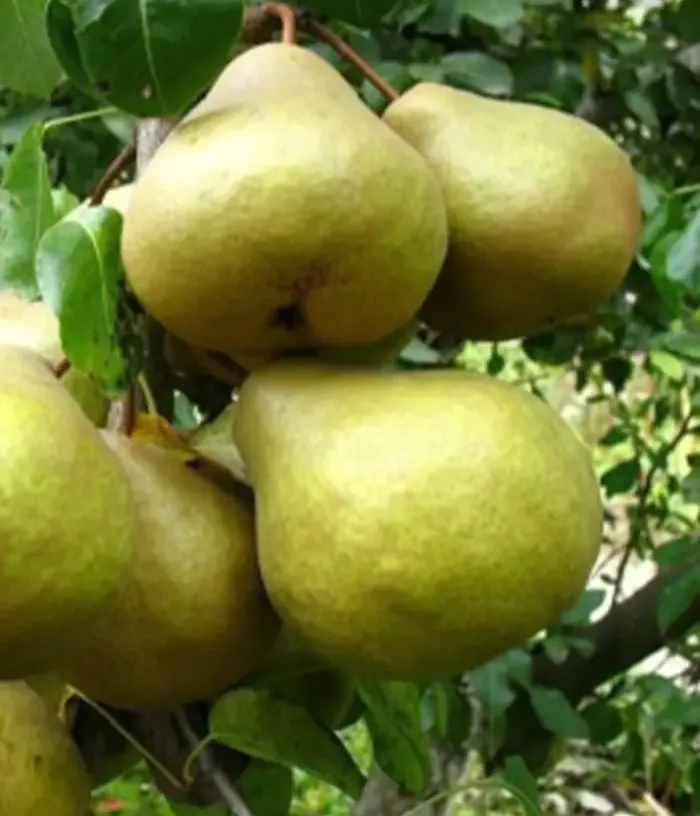
  • Shape: They have a broad-pyriform, sometimes almost apple-like shape. The largest fruits can be slightly ribbed/bumpy.
  • Skin: It is dry, with characteristic russeting. At harvest time it is green-yellow (to green-brown), acquiring a rich golden-yellow color at full maturity. A faint, blurred reddish blush often forms on the sunny side.
  • Flesh: It is creamy-white. The texture is excellent – fine-grained, meaty, medium firm, yet very tender, buttery (melting), and extremely juicy.
  • Taste and aroma: The taste is top-notch, distinctly sweet, without any disturbing acidity. It features a strong, very pleasant dessert aroma. In professional tastings, it achieves exceptionally high scores (4.6 - 5 out of 5 points). When eaten, the skin is not felt in the mouth at all.
Cultivation properties and agrotechnics
  • Ripening and storage:
    • Harvest time: It is a late autumn variety. Harvest maturity occurs in the second half of September.
    • Consumption maturity: Similar to winter varieties, fruits straight from the tree are not suitable for consumption. They reach their full flavor potential and buttery texture after "conditioning" in storage (usually late October to November).
    • Storability: Very good. Under cold conditions (refrigerator, good cellar), the fruits last without loss of quality until late December or early January (2-3 months).
  • Yield and pollination:
    • Onset of fruiting: The variety begins fruiting early. On a quince rootstock, it starts bearing already in the 3rd - 4th year, and on a seedling in the 4th - 5th year after planting.
    • Yield: Stable, regular, and very high (30 - 40 kg from a mature tree).
    • Pollination: It is partially self-fertile. However, for maximum yields, it is recommended to plant other pear varieties nearby that bloom at the same time (e.g., 'Abbé Fétel', 'Clapp's Favorite', 'Louise Bonne of Jersey', 'Verdi', 'Medova', 'Blanka').
  • Resistance and requirements:
    • Frost resistance: Very high (tolerance reported down to -35 °C). It is also suitable for colder regions.
    • Diseases: Characterized by top resistance to pear scab and white leaf spot. It is a very healthy tree that does not require intensive chemical protection. (Note: fruit rot may occasionally occur).
    • Location: Undemanding to soil, prefers a sunny location.

Drawbacks of the variety:

  • Shorter storage life compared to true winter varieties (lasts "only" until December/January).
  • Fruits require time to "condition" after harvest; they cannot be eaten directly from the tree.
  • Mild susceptibility to fruit rot under very unfavorable conditions.

Write a review

Note: HTML is not translated!
Rating
Bad Good
reCAPTCHA verification failed! Please try again.
The HAYATAMA pear is a Japanese pear variety that originates from Wakayama prefecture in southern Japan. The HAYATAMA pear is a medium-sized tree wi..
Price
29.00€
Ex Tax:25.66€
Add to Cart
The Hosui pear, also known as the Japanese pear, is a popular pear variety grown in Japan and other parts of the world. Hosui is a medium-sized tree t..
Price
29.00€
Ex Tax:25.66€
Add to Cart
The Japanese pear variety Nijisseiki, also known as Niitaka pear, is one of the popular cultivars of Japanese pears. This variety originates from Japa..
Price
29.00€
Ex Tax:25.66€
Add to Cart
The Japanese pear variety SHINSEIKI is one of the popular cultivars of Japanese pears. It originates from Japan and is highly regarded for its excelle..
Price
29.00€
Ex Tax:25.66€
Add to Cart