Cart

Pear (pyrus communis) LJUBIMICA OSENNJAJA
Pear (pyrus communis) LJUBIMICA OSENNJAJA
New
Pear (pyrus communis) LJUBIMICA OSENNJAJA
Specifications
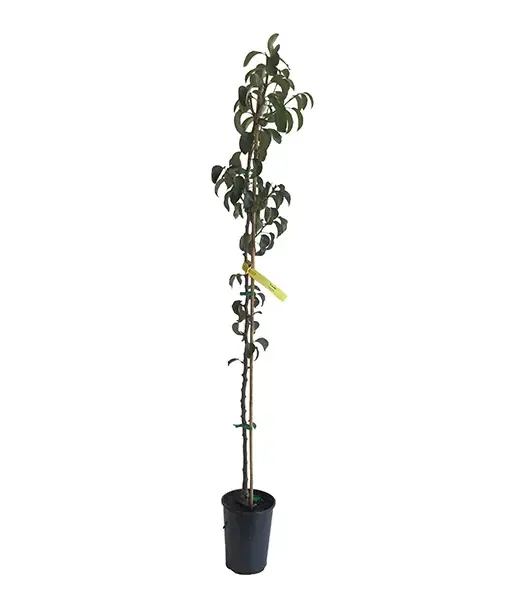
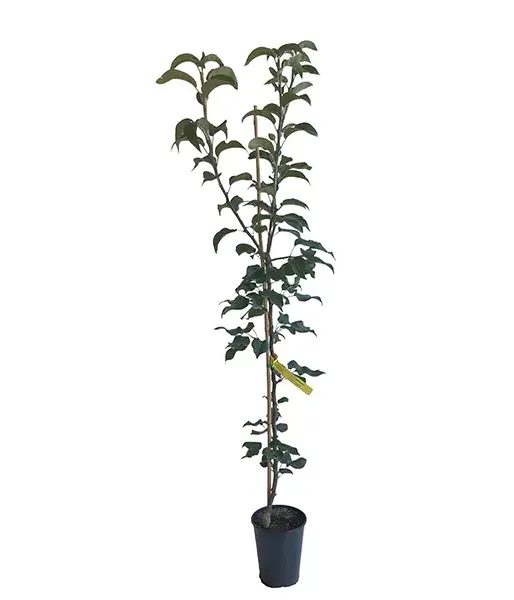
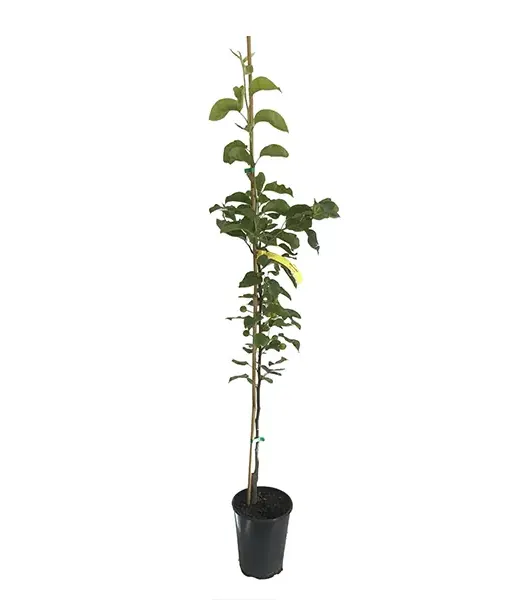
Height at sale160cm
Pot5l
RootstockPyrus communis var. caucasica
Ripening timeSeptember
The standard delivery time for Germany is 3-5 working days.(except for goods "On request")
We send goods on Monday, Tuesday, Wednesday, by agreement also Thursday or Friday.
Price
39.90€
Ex Tax: 35.31€
  • Stock: In Stock
  • Model: Pyrus communis

Pear (Pyrus communis) - Variety 'Ljubimica Osennjaja' (Любимица осенняя)

'Ljubimica Osennjaja' is a high-quality autumn pear variety that combines the excellent characteristics of its famous parents. It is prized primarily for its neat, attractive fruits with thin skin and an excellent, wine-sweet taste without unwanted grittiness.


Pear (Pyrus communis) 'Ljubimica Osennjaja'

Thanks to its good frost resistance and resistance to scab, it represents a reliable choice for home gardens.

Main advantages of the variety:

  • Excellent, wine-sweet taste with very juicy flesh.
  • Absence of grittiness (sclereids) in the flesh.
  • Attractive appearance of fruits with thin skin.
  • Above-average frost resistance.
  • Good scab resistance (suitable for home gardens without the need for frequent chemicals).
  • Versatile use of the fruits.
Origin and Breeding
  • Origin: Former Soviet Union (Ukraine). The variety was bred at the Krasnokutsk experimental horticultural station in 1958. It was accepted into state variety trials in 1983.
  • Breeders: A. I. Shepelsky, E. S. Polyakova, A. E. Berendey.
  • Genetics (Crossing): Created by a targeted cross of the world-famous summer variety 'Clappova' and the late variety 'Dekanka zimnjaja'.
Detailed variety description: Plant
  • Vigor: The tree has a medium-strong growth, reaching a height of 3 to 4 meters at maturity (depending on the rootstock used).
  • Crown: Forms a spherical-spreading crown with medium branch density, which facilitates light access to the fruits and simplifies pruning.
Fruits and Flavor Profile (Key feature)
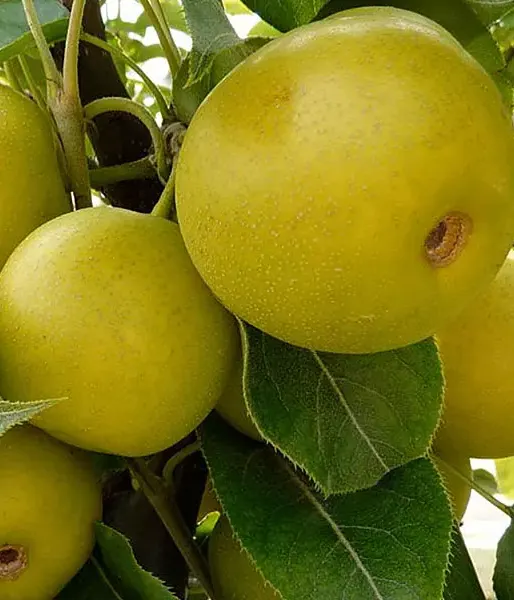
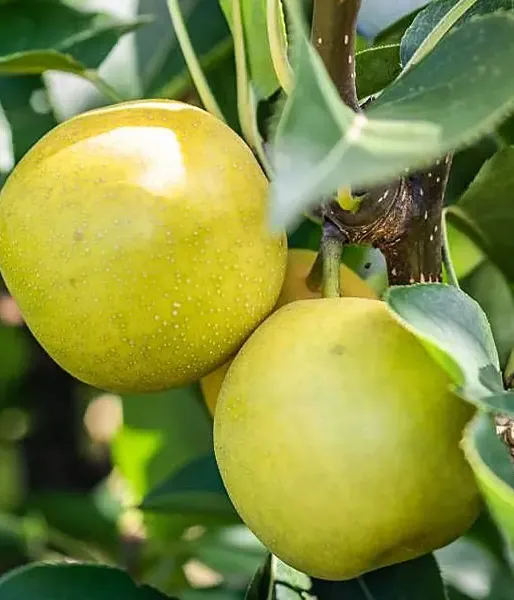
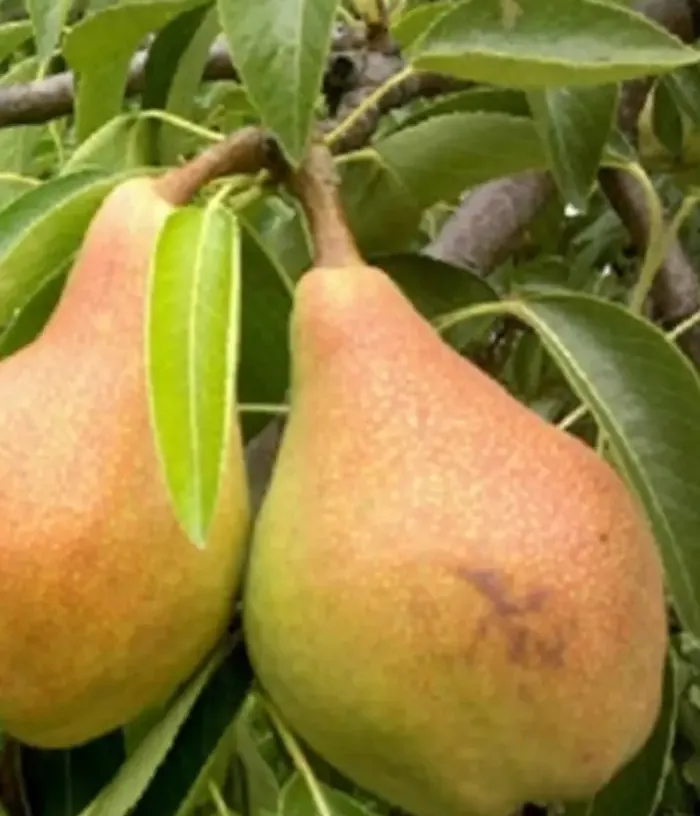
  • Appearance and size: The fruits are large, usually weighing around 170 g (but often reaching up to 200 g). They have a nice, broad-pyriform shape, are symmetrical, and very uniform in shape.
  • Skin: It is very delicate and thin. The base color is green-yellow, covered on the sunny side by an attractive, striped red blush.
  • Flesh: Has a subtle greenish tint. It is firm, yet semi-melting and extremely juicy. A huge advantage is that the flesh is completely free of grittiness (contains no hard sclereids around the core). Interestingly, the flesh does not become watery even with heavier watering of the tree.
  • Taste and aroma: The taste is rated as excellent – it is distinctly sweet with a pleasant wine-like undertone and sweet juice. The aroma is rather milder, unobtrusive.
Cultivation properties and agrotechnics
  • Ripening and yield:
    • Harvest time: It is a typical autumn variety. Fruits ripen in early September.
    • Yield: Rated as medium, but stable. A mature tree can produce approximately 80 kg of fruit.
    • Use: The variety has versatile uses – it is excellent for direct consumption fresh, but thanks to its firmer semi-melting flesh, it is also great for canning (compotes).
  • Pollination and requirements:
    • Pollination: The variety is cross-pollinated. To produce fruit, it strictly needs another pear variety blooming at the same time (May) nearby. Suitable pollinators include, for example: 'Clappova', 'Abbé Fétel', or 'Verdi'.
    • Location and soil: Prefers a sunny location to partial shade. Thrives best in fertile, loamy, or sandy-loamy soils with a slightly acidic reaction.
    • Resistance: Characterized by above-average frost resistance and very good natural resistance to pear scab, which it suffers from only very slightly. Drought tolerance is medium (watering is recommended).

Drawbacks of the variety:

  • Medium yield (compared to highly productive commercial varieties).
  • Milder aroma of the fruits.
  • Is cross-pollinated (requires the presence of another variety).
  • The thin skin can be more susceptible to mechanical damage during careless harvesting.

Write a review

Note: HTML is not translated!
Rating
Bad Good
reCAPTCHA verification failed! Please try again.
The HAYATAMA pear is a Japanese pear variety that originates from Wakayama prefecture in southern Japan. The HAYATAMA pear is a medium-sized tree wi..
Price
29.00€
Ex Tax:25.66€
Add to Cart
The Hosui pear, also known as the Japanese pear, is a popular pear variety grown in Japan and other parts of the world. Hosui is a medium-sized tree t..
Price
29.00€
Ex Tax:25.66€
Add to Cart
The Japanese pear variety Nijisseiki, also known as Niitaka pear, is one of the popular cultivars of Japanese pears. This variety originates from Japa..
Price
29.00€
Ex Tax:25.66€
Add to Cart
The Japanese pear variety SHINSEIKI is one of the popular cultivars of Japanese pears. It originates from Japan and is highly regarded for its excelle..
Price
29.00€
Ex Tax:25.66€
Add to Cart