Cart

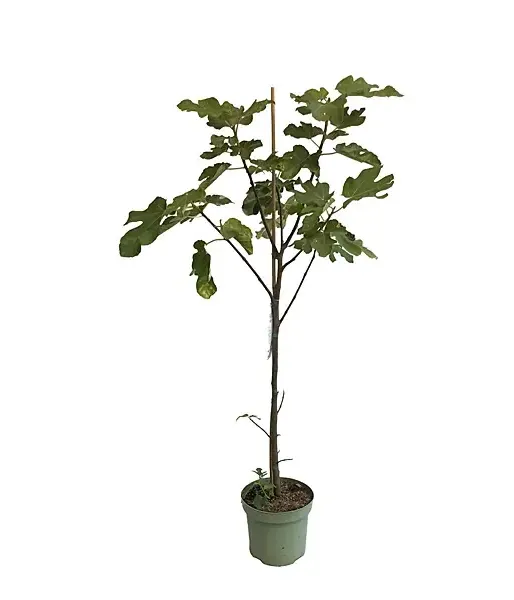
Fig Tree (Ficus carica) NEGRONNE
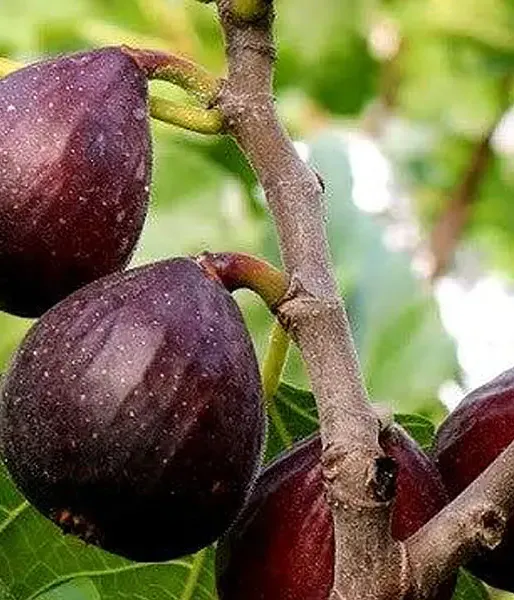
Fig Tree (Ficus carica) NEGRONNE
New
Fig Tree (Ficus carica) NEGRONNE
Specifications
Height at sale60-80cm
Pot2,5l
Sell as2 year old
Ripening timeAugust-October
The standard delivery time for Germany is 3-5 working days.(except for goods "On request")
We send goods on Monday, Tuesday, Wednesday, by agreement also Thursday or Friday.
Price
39.00€
Ex Tax: 34.51€
  • Stock: In Stock
  • Model: Ficus carica

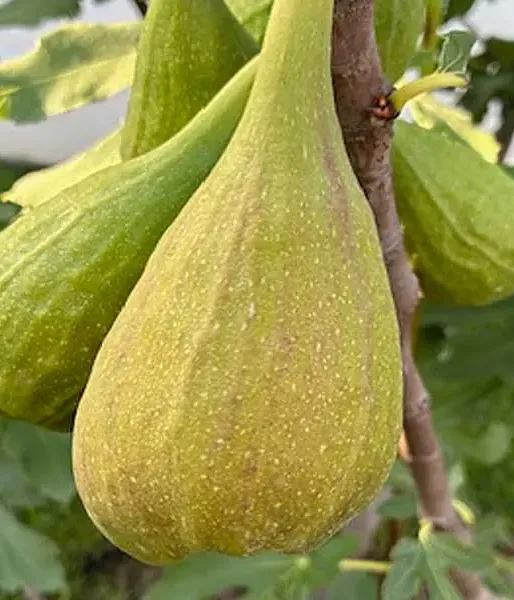
Fig Tree - Variety 'Negronne' (Ficus carica)

The 'Negronne' cultivar, known across the globe as "Violette de Bordeaux," is celebrated by pomologists and culinary enthusiasts as one of the finest-tasting figs on Earth. It is a genuine gourmet masterpiece, pairing regal French tradition with the heavy-duty cold hardiness required for Central European gardens. You will instantly fall in love with its deep, dramatic coloration, a complex flavor profile evoking fine vintage wine, and its extraordinary capacity to produce massive yields in compact garden spaces.

Origins and Royal Lineage: This heritage French variety is steeped in the history of the royal gardens at Versailles. In horticultural literature, it often appears under the synonyms Violette de Bordeaux, Figue Poire, or Petite Aubique. Documented in detail as early as 1692 by the royal head gardener J.B. de la Quintinie, it became a personal favorite of King Louis XIV, the "Sun King." Its historical success around Paris, England, and North America proves its outstanding ability to thrive and reliably ripen even in cooler climates with shorter autumns.

Key Advantages of the Variety:

  • World-Class Flavor: Complex, intense flavor profile dominated by dark forest berries and fine aged wine.
  • Rapid Wood Maturation: New growth hardens and matures early in summer, providing superior frost resistance.
  • Compact Footprint: The ultimate choice for patio containers and small urban yards.
  • Unrivaled Productivity: Delivers an exceptionally high volume of fruit per square meter of canopy.
  • Rain Resistance: The fruits resist splitting and souring, even during persistent damp weather.
  • Culinary Versatility: Because the figs hold their shape well, they excel both for fresh eating and gourmet cooking.

Detailed Plant Profile

Growth, Habit, and Resilience

  • Habit: Shows medium vigor, naturally developing a shorter, compact, and pleasantly spreading structure. In open garden soil, it maintains a manageable height of 2.5 to 3 meters.
  • Pruning and Container Culture: Highly adaptable to shaping; it can easily be trained as a tidy standard tree or a multi-stemmed bush. Its restrained size makes it arguably the best candidate for permanent patio container culture.
  • The Secret to Its Cold Hardiness: The variety's winter hardiness stems directly from its growth rhythm—it does not produce excessively long, soft shoots. Instead, the wood lignifies and hardens unusually early in the summer, even when grown in partial shade.

Fruit Profile – Two Harvest Seasons

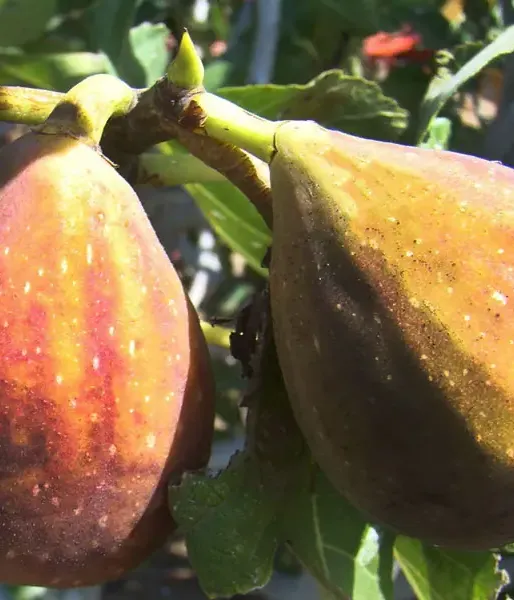
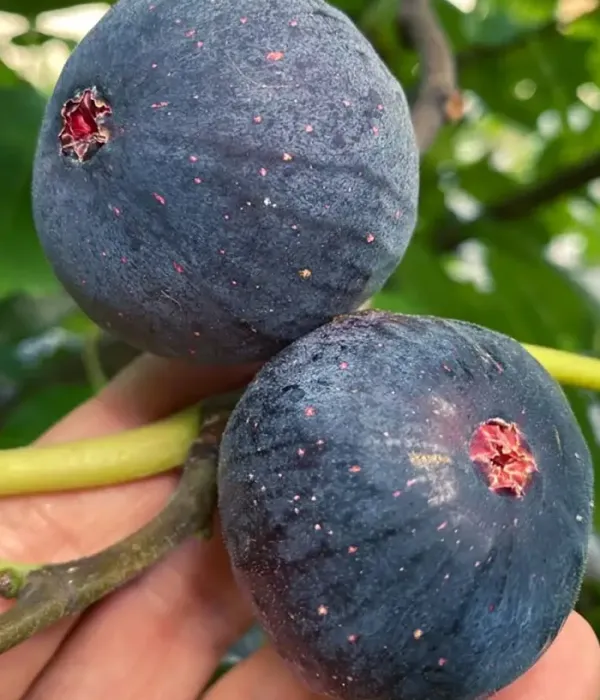
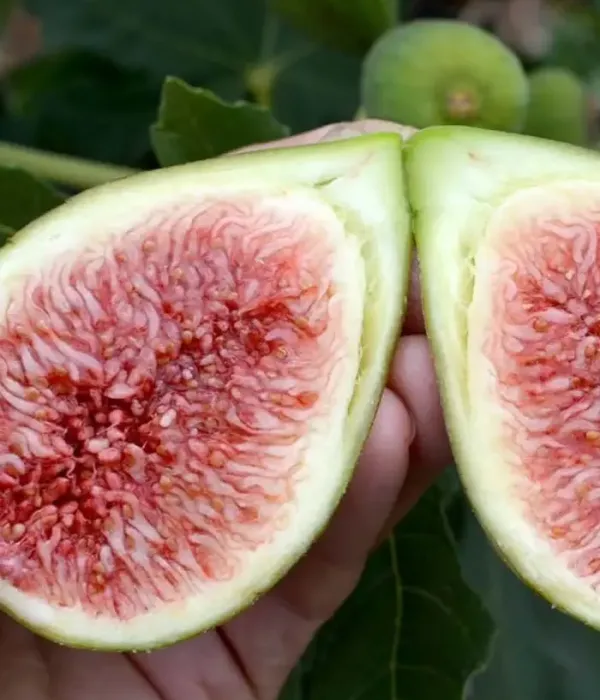
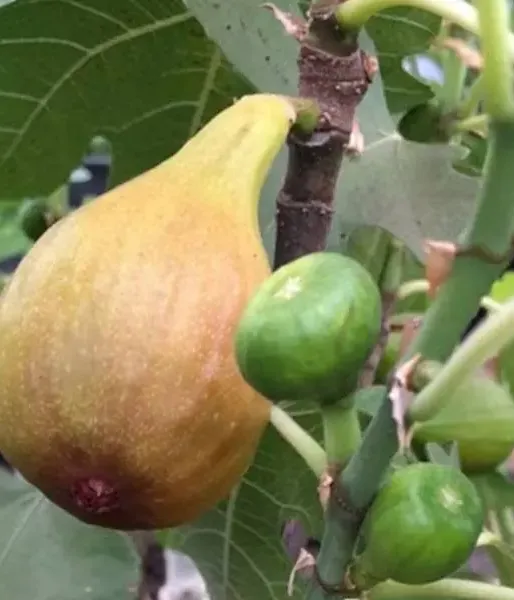
  • First Crop (Summer / Breba): Ripens reliably starting in early July on the previous year's wood. The figs are medium-sized (~50 g) with an attractive pyriform (pear-like) shape. The thin skin is dark purple to coal-black. Inside, the deep red, creamy flesh delivers delicate flavors of ripe berries.
  • Second Crop (Main / Autumn): Produces heavily from mid-August through October on new shoots. These figs are smaller (35 – 45 g), blue-black with tiny pale speckles, and feature a slightly firmer skin. The taste is remarkably concentrated and jammy, striking a flawless balance between rich sugars and wine-like fruitiness.

Cultivation, Care, and Harvest Tips

  • Pollination and Weather Resilience: Parthenocarpic (self-fertile, Adriatic group). Both crops display superior rain tolerance, resisting cracking or internal rotting during wet conditions.
  • Cold Hardiness and Planting: Reliably hardy down to -17 °C (1.4 °F). Plant 2 to 3-year-old trees in open ground. In colder areas, insulate the trunk during winter until it achieves a caliper of 6 to 7 cm.
  • Sun Requirements (Insights from Vienna): A small bush can set up to an astonishing 300 figs in the autumn. For the majority of this crop to mature, the tree must enjoy full sun throughout September and October. As ambient light levels drop late in the season, the quality of the final late figs begins to decline.
  • Harvesting Tip: Do not leave autumn figs to overripen on the tree. If left hanging too long, they lose their juicy consistency, begin to dry out, and the skin can turn unpleasantly thick and tough. Pick them when they are soft to the touch yet still plump with juice.

Drawbacks of the Variety:

  • Smaller Autumn Size: Main-crop figs are on the smaller side, averaging around 35 g.
  • Thick Skin When Overripe: Overmature fruit tends to develop a leathery, dry skin.
  • Autumn Sunshine Demands: Ripening the entire massive autumn yield requires warm, uninterrupted sunshine through September and October.

Write a review

Note: HTML is not translated!
Rating
Bad Good
reCAPTCHA verification failed! Please try again.
Hurmi Kaki FUYU is one of Japan's large-fruited varieties, popular because the fruit can be eaten directly from the tree when ripe. In our country, it..
Price
39.00€
Ex Tax:34.51€
Add to Cart
Hurmi Kaki ROJO BRILLANTE is one of the Japanese large-fruited varieties, popular because the fruit is of the highest quality. In our country it can b..
Price
39.00€
Ex Tax:34.51€
Add to Cart