

New Cherries & Sour Cherries 2026: Krupnoplodnaya, Leningradskaya, and More

Cherries and Sour Cherries for the 2026 Season: Ukrainian Giants and Frost-Resistant Northern Legends
Eastern European and Baltic fruit breeding ranks among the world's elite in terms of resilience and flavor quality. For the 2026 season, we have selected five unique varieties that meet the needs of both commercial growers and demanding home gardeners. Varieties from this region are specially bred to handle deep winter frosts and unpredictable spring weather.
“When it comes to stone fruits from the East and North, one rule applies: they are built for survival. They handle frosts below -30 °C and often outperform commercial southern varieties in taste. These are trees that bring certainty of regular harvests and premium-sized fruits to your garden.”
Let’s take a detailed look at three sweet cherry varieties and two sour cherry varieties that represent the technological and breeding elite of their respective countries.
Part I: Sweet Cherries – Ukrainian Giant and Russian Classic
1. 'Krupnoplodnaya': The Ukrainian Market Leader
The variety 'Krupnoplodnaya' (translated as "Large-fruited") originates from the Melitopol Research Institute. It is one of the most important market varieties in Ukraine, renowned for its stability and extraordinary fruit dimensions.
Record-Breaking Fruit Size
The fruits reach an average weight of 10–14 grams, but specimens weighing up to 18 grams are not uncommon. The flesh is dark red, very firm, juicy, and crunchy. The flavor is rated as dessert-quality, sweet-tart to sweet.
- Resilience: Withstands frosts down to -28 °C and shows good resistance to Monilinia.
- Yield: Enters bearing early (3rd-4th year); a mature tree yields 60–70 kg of fruit.
- Pollination: Partially self-fertile, but requires a pollinator (e.g., 'Surpriz' or 'Talisman') for maximum yields.
2. 'Leningradskaya Chornaya': The Russian Honey Legend
This variety from the Pavlovsk Experimental Station is known for its almost black fruits and extreme frost hardiness (down to -35 °C). It is a tree that remains compact in the garden and bears fruit annually.
- Flavor: The fruits are very sweet to "over-sweet," with a subtle spicy aroma and soft, fibrous flesh.
- Harvest: Ripens gradually from mid-July; fruits do not drop upon ripening and stay on the tree for a long time.
- Use: Due to its color and taste, it is ideal not only for fresh consumption but also for decorating confectionery products.
3. 'Paula': The Unique Latvian Yellow
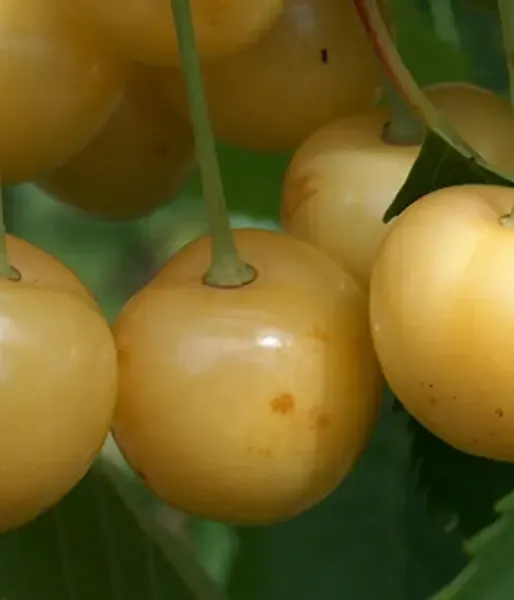
The 'Paula' variety (registered in 2011) is a Latvian heart cherry that arose from the open pollination of the 'Krupnoplodnaya' variety. Its most striking feature is its pure yellow skin color.
The fruits are heart-shaped, sweet, and delicate. They are highly resistant to diseases and frost (both wood and buds). While slightly more susceptible to cracking in rainy weather, it is highly valued in home processing due to its high sugar content (16.5 °Brix).
Part II: Sour Cherries – Health and Regular Harvests
4. 'Haritonovskaja': Russian Excellence in Resilience
Bred at the All-Russian Research Institute of Genetics and Breeding of Fruit Plants (Michurin Institute), the 'Haritonovskaja' variety stands out for its excellent health. It is a medium-strong, shorter tree (2–3 m), which facilitates harvesting.
Flavor with a Sweet Cherry Aftertaste
The fruits are large (5 g), dark red with orange juicy flesh. The flavor is excellent, sweet-tart, with a characteristic sweet cherry aftertaste. The variety is highly resistant to Monilinia and leaf spot.
5. 'Latvijas Zemais': The Latvian Standard for Processing
This is an old, widely distributed Latvian variety belonging to the Amarelle group (dark fruit and dark juice). It is an exceptionally reliable sour cherry suitable even for the most unfavorable conditions.
- Habit: Low, often bush-like growth (up to 2.5 m) with drooping branches.
- Fruits: Medium-sized, dark red, with soft and juicy flesh. They contain a high proportion of anthocyanins and phenols.
- Reliability: Considered the most regularly bearing sour cherry, yielding crops as early as the 2nd to 3rd year after planting.
Summary Variety Comparison (2026 Season)
| Variety | Type | Fruit Weight | Main Advantage |
|---|---|---|---|
| Krupnoplodnaya | Sweet Cherry | 10 – 14 g (max 18 g) | Extreme size and transportability |
| Leningradskaya Ch. | Sweet Cherry | 3 – 4 g | Frost hardiness (-35 °C) and sweetness |
| Paula | Sweet Cherry | Medium to Large | Unique yellow color and high sugar |
| Haritonovskaja | Sour Cherry | 5 g | Disease resistance, dessert flavor |
| Latvijas Zemais | Sour Cherry | 3 – 3.5 g | Compact growth and stable harvest |
Conclusion
The 2026 cherry and sour cherry collection is compiled to provide solutions for every grower. If you are looking for records in yield and size, the Ukrainian and Russian assortment is unsurpassed. If low trees and frost hardiness are your priority, the Latvian varieties will not disappoint you. All these varieties combine a high proportion of bioactive substances and a flavor authenticity that has vanished from supermarkets.
Prepare for the arrival of these rare varieties
View our stone fruit offer ➤
Want to learn more about cultivation?
Follow us on Facebook and stay updated on stock arrivals and new varieties.
Follow us on Facebook ➤
Related Products