









How Resistance to Diseases and Pests Differs Among the Five Types of Blueberries
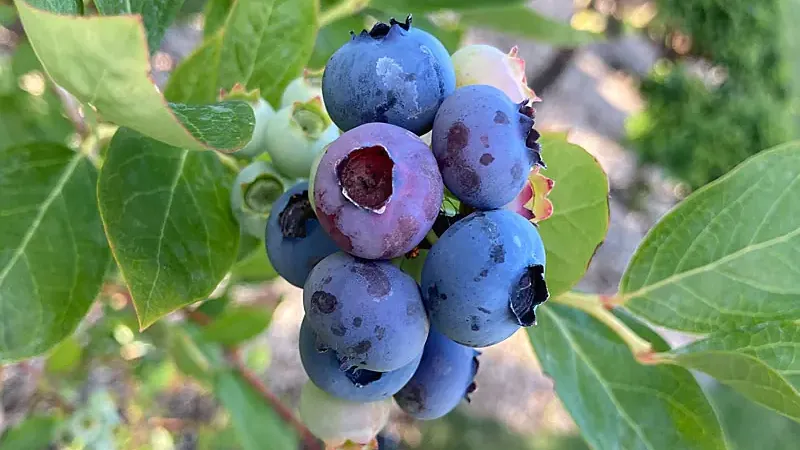
The Genetic Shield: How Resistance to Diseases and Pests Differs Among the Five Types of Blueberries
In the battle for survival and productivity, no blueberry is absolutely immune, but each has its strengths and weaknesses. Resistance to pathogens and pests is the result of millions of years of evolution in specific environments and a century of targeted breeding. While some types excel in root robustness, others have leaves that insects find unpalatable.
Understanding these species-specific traits is crucial for Integrated Pest Management (IPM) and choosing the right variety for a given location. This article analyzes the phytopathological and entomological profile of the five main types of blueberries.
“Chemical protection is often just a band-aid. True stability in the orchard begins with understanding genetic limits. If you know your blueberry type has 'soft roots', no fungicide will save it in waterlogged soil in the long run.”
1. Northern Highbush (NHB): The Sensitive Aristocrat
Northern Highbush (Vaccinium corymbosum) is the most widely grown, but also one of the most sensitive types. Its long history of cultivation in intensive monocultures has led to a dangerous accumulation of specific pathogens.
The Achilles Heel: Root Rot
The greatest weakness of NHB is its susceptibility to root rot (Phytophthora cinnamomi). This pathogen literally decimates plantings on heavier and waterlogged soils. For this reason, growing on raised beds with perfect drainage is absolutely essential for this type.
Another serious problem is stem canker (Botryosphaeria corticis), which historically caused heavy losses, although modern varieties have a higher degree of resistance. In terms of viruses, NHB is extremely susceptible to Blueberry Shoestring Virus (transmitted by aphids) and Blueberry Scorch Virus. These diseases can destroy entire plantations and require strict certification of planting material and vector control.
2. Southern Highbush (SHB): The Toll for Warmth
Southern Highbush inherited excellent resistance to foliar diseases from its parent V. darrowii. However, growing it in extremely warm and humid conditions (Florida, Georgia) brings specific challenges.
The Stem and Branch Killer
SHB is extremely sensitive to stem blight (Botryosphaeria dothidea). This pathogen enters the plant through open wounds (e.g., after pruning or frost damage) and, in warm weather, quickly and ruthlessly kills entire branches or even whole bushes. Resistance to this disease is one of the main goals of SHB breeders today.
A new and serious threat to this type is the bacterium Xylella fastidiosa (Bacterial Leaf Scorch), which causes rapid leaf drying and plant death. Varieties like 'Meadowlark' are highly susceptible to it, while others show tolerance. SHB also suffers from rust (Pucciniastrum vaccinii), which can cause premature leaf drop and reduce yields the following year.
3. Rabbiteye (RE): The Resilient Giant
Rabbiteye (Vaccinium virgatum) has a well-deserved reputation as the most resilient blueberry type. Historically, it was considered an almost problem-free crop, capable of growing even without intensive chemical protection.
Roots of Iron
Unlike NHB, Rabbiteye is naturally resistant to root rot (Phytophthora). This allows it to thrive on a wider range of soils, including heavier clay soils where other blueberries would die. This trait is genetically determined and is also used in breeding other types.
RE is also more resistant to stem canker (Botryosphaeria corticis), although it is not immune to stem blight (Botryosphaeria dothidea), especially under stress conditions.
Its main enemy is the blueberry gall midge (Dasineura oxycoccana). This tiny insect lays eggs in flower buds, which subsequently die. Varieties like 'Brightwell' and 'Powderblue' show a high degree of resistance. RE is also susceptible to Blueberry Stunt (phytoplasma), transmitted by leafhoppers.
4. Half-high (HH): Resilience in the Cold
Half-high (HH) blueberries benefit from the genes of V. angustifolium (Lowbush), which give them not only frost hardiness but also a certain tolerance to diseases typical of wet and cold conditions.
Their lower stature and more open crown can reduce the infection pressure of fungal diseases compared to the dense bushes of NHB. However, they are susceptible to mummy berry (Monilinia vaccinii-corymbosi), which attacks flowers and fruits under conditions of prolonged spring moisture. Since HH share genetics with NHB, they are susceptible to a similar spectrum of viruses if grown near infected plantations.
5. Lowbush (LB): The Problems of Monoculture
Lowbush (Vaccinium angustifolium) blueberries in wild stands face specific challenges. Although they are naturally highly resilient, growing them in vast monocultures in Maine and Canada creates ideal conditions for the massive spread of diseases and pests.
A key problem is mummy berry (Monilinia), which can destroy the entire crop if not controlled by fungicides. Another threat is leaf spot (Valdensinia), which causes premature leaf drop.
Pests and Invasive Species
Historically, the biggest problem has been the blueberry maggot (Rhagoletis mendax), whose larvae ruin the fruit and require strict monitoring programs. Recently, the invasive Spotted Wing Drosophila (Drosophila suzukii) has joined it, attacking ripening fruits.
Overview of Threats by Blueberry Type
| Blueberry Type | Greatest Fungal / Bacterial Threat | Greatest Pest / Virus |
|---|---|---|
| Northern Highbush | Phytophthora (root rot) | Viruses (Shoestring, Scorch) |
| Southern Highbush | Botryosphaeria (stem blight) | Bacterial Leaf Scorch (Xylella) |
| Rabbiteye | Resistant to root rot | Blueberry gall midge |
| Lowbush / Half-high | Monilinia (mummy berry) | Blueberry maggot |
Conclusion
Resistance to diseases and pests is not a static trait, but a dynamic interaction between the plant, the pathogen, and the environment. While Rabbiteye excels in root indestructibility, Southern Highbush fights hard against stem diseases, and Northern Highbush battles invisible viruses. Lowbush and Half-high face challenges associated with moisture and cold. Knowing these specifics allows growers not only to choose the right variety for their location but also to adapt agrotechnics so as to minimize risks and maximize the health and productivity of their plantings.
Choose healthy and certified plants
View our offer of resistant blueberry varieties ➤
Fighting diseases in your orchard?
Join our community and consult directly with experts.
Join the VIP Facebook group HERE ➤