









Quick Pectin Jam or Slow-Cooked Fruit Butter? The Science Compared
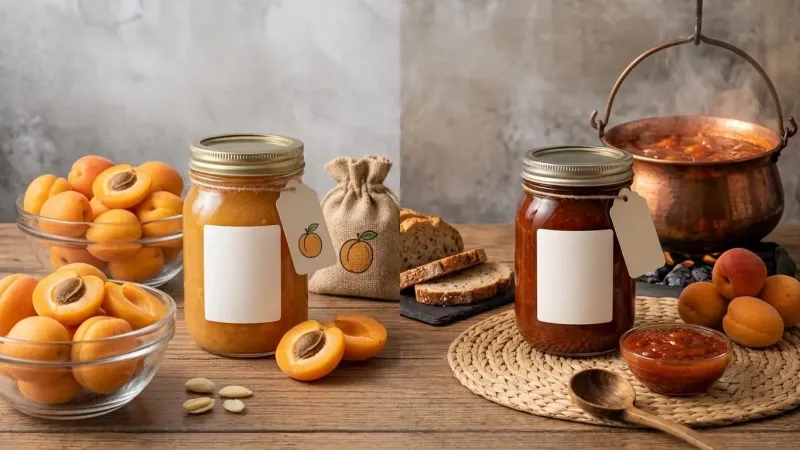
Battle in the Summer Kitchen: Quick Jam vs. Traditional Fruit Butter
A scientific look at what really happens in the pot with apricots, peaches and their carotenoids
The smell of bubbling apricots on the stove is an unmistakable sign that summer has reached its peak. When it comes to processing this sweet gold at home, cooks tend to split into two irreconcilable camps. The first camp swears by modern setting agents (such as pectin mixes), which turn fresh fruit into jam in just a few minutes. The second follows the patience of grandmothers past, slowly cooking or baking the fruit for hours until the water evaporates and a thick, dark fruit butter is left behind. Which approach actually comes out ahead from a nutritional science point of view?
When it comes to the so-called orange miracle — fruit packed with carotenoids — the answer is not black and white. Each method triggers a completely different set of chemical reactions in the pot. Let's take a closer look at what each preparation method actually gives you, and what it takes away.
Orange color as proof of carotenoid power
The main characters of this story are fruits with a deep yellow or orange color — apricots, peaches, but also mango or pumpkin. Their color is visual proof of the presence of carotenoids, most notably beta-carotene, exceptionally powerful antioxidants that help protect cells, eyesight and the heart.
In raw fruit, carotenoids are locked inside rigid cell structures and the surrounding plant matrix. Only heat can break down these walls and release the nutrients so the body can actually absorb them. Both methods — quick jam and slow-cooked fruit butter — rely on heat, yet the resulting products are nutritionally worlds apart.
|
3 – 10 min
cooking time for quick jam
|
1:1 to 2:1
sugar-to-fruit ratio in jam
|
several hours
cooking time for fruit butter
|
← Swipe the table sideways →
Method 1: modern jam with pectin
Method 2: long, slow cooking with water evaporation
Sugar-to-fruit ratio, by the numbers
| Traditional fruit butter | minimal to no sugar |
| Quick jam with pectin | 1:1 to 2:1 |
The scale shows the ratio of sugar weight to fruit weight, ranging from 0:1 to 2:1.
← Swipe sideways →
Long cooking and baking of fruit creates the dark color of fruit butter through the Maillard reaction — and along with it, an entirely new generation of antioxidants that weren't in the pot to begin with.
Comparison at a glance
| Indicator | Quick jam | Traditional fruit butter |
| Cooking time | 3 – 10 minutes | Several hours |
| Sugar content | High (1:1 to 2:1) | Low to none |
| Vitamin C | Partly preserved | Practically destroyed |
| Minerals per 100 g | Diluted by sugar | Extremely concentrated |
| Carotenoid availability | Increased | Maximal |
| Fiber from pectin | Yes | No |
← Swipe the table sideways →
The golden rule for both methods: fat is essential
Carotenoids are lipophilic compounds, meaning they dissolve only in fat. If you eat a spoonful of apricot jam or fruit butter on its own, your body will get minerals and sugars, but the valuable carotenoids will largely pass through unused. To be absorbed through the intestinal wall into the bloodstream, they need a fat carrier. Spreading jam or fruit butter on bread with a generous layer of butter is therefore, from a scientific standpoint, one of the best things you can do for your health.
Which method should you choose?
|
|
Want jam ready in just a few minutes and don't mind a higher sugar content? Reach for pectin. |
|
|
Looking for the most concentrated source of minerals and carotenoids and have the time? Go for traditional, slow-cooked fruit butter. |
|
|
Note: neither product is a reliable source of vitamin C — top that up from fresh summer fruit instead. |
Conclusion
The battle between quick jam and traditional fruit butter has no clear winner, because each product offers a different nutritional profile.
If you prefer a fresher taste, don't mind a higher sugar content, and want to retain at least some heat-sensitive compounds, quick jam with pectin is your choice. Just accept that, due to the dilution effect, you're actually eating less fruit and fewer minerals per serving.
But if you're after a truly concentrated nutritional powerhouse, the winner is traditional, slow-cooked fruit butter. By evaporating the water, you get a product with extreme mineral density, maximally released carotenoids, and bonus antioxidants from the Maillard reaction. You do sacrifice vitamin C, but that's easy to make up for in summer from other fresh sources.
Whichever path you choose, don't forget a piece of butter. Science confirms that the best things for our health are often hiding in the most traditional and delicious combinations.
|
Grow your own apricots and peaches Choose an apricot or peach variety straight from our shop and enjoy your own harvest for jam and fruit butter every summer. Browse varieties |
Join our community of fruit growers Swap growing tips, ask about varieties and share your harvest on our Facebook page full of enthusiastic fruit growers, chat with experts, and be the first to see new articles. Visit our page |