


Cart

Cherry (Prunus avium) ELFRĪDA
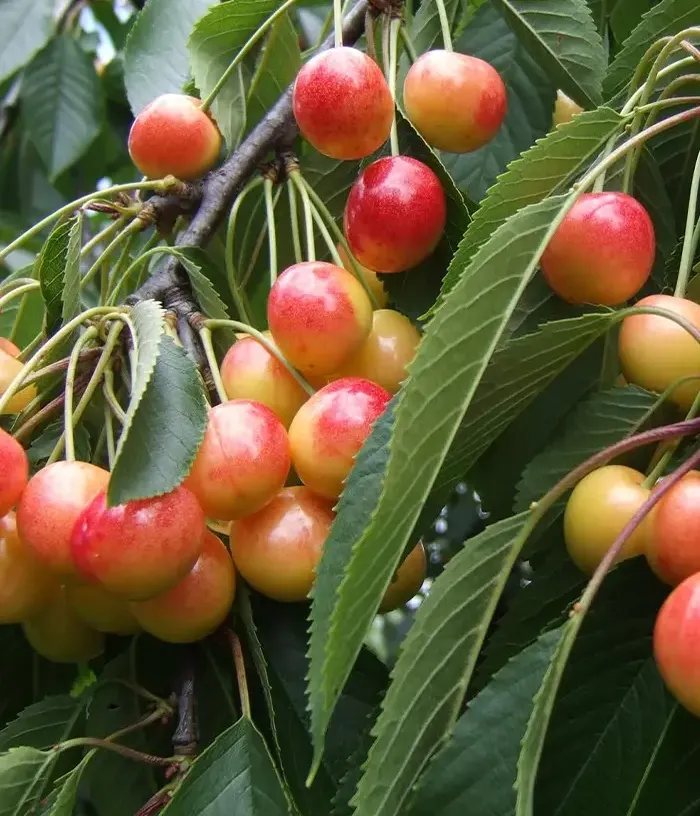
Cherry (Prunus avium) ELFRĪDA
New
Cherry (Prunus avium) ELFRĪDA
Specifications
Height at sale160cm
Pot7L
RootstockPrunus mahaleb
The standard delivery time for Germany is 3-5 working days.(except for goods "On request")
We send goods on Monday, Tuesday, Wednesday, by agreement also Thursday or Friday.
Price
39.90€
Ex Tax: 35.31€
  • Stock: In Stock
  • Model: Prunus avium

Sweet Cherry (Prunus avium) - Variety 'Elfrīda'

'Elfrīda' is a valuable, historical Latvian sweet cherry variety created to extend the cherry season into late summer. It is a typical, high-quality "cartilaginous" (firm-fleshed) cherry with attractive yellow-red fruits.


Sweet Cherry (Prunus avium) 'Elfrīda'

Thanks to its late ripening (in August) and firm, crunchy flesh, it represents an excellent choice for gardeners who want to enjoy fresh cherries long after common varieties have finished blooming and fruiting.

Main advantages of the variety:

  • Very late ripening (August) – ideal for extending the season.
  • Firm, crunchy, and juicy flesh (excellent firm-flesh texture).
  • Attractive, glossy yellow-red fruit appearance.
  • Very good, sweet taste.
  • Medium, well-manageable tree vigor.
Origin and Breeding
  • Origin: Latvia ("Iedzēni" Research Station).
  • Breeders: Roberts Āboliņš and Aleksandrs Maizītis.
  • History: The breeding program began in the early 1950s (parallel to the work of the famous P. Upītis). The goal was to increase winter hardiness and extend the season of cherries, which at that time were only available on the market in mid-summer. 'Elfrīda' was selected as one of the best out of 100 elite hybrids.
  • Genetics: The crossing utilized early Western European varieties, frost-hardy local varieties (e.g., 'Drogana Dzeltenais'), and large-fruited varieties for fruit quality ('Napoleon', 'Hedelfinger').
  • S-alleles (Compatibility): The variety has the S5S6 genetic profile (belongs to compatibility group XV), which is very rare, making it practically a universal pollinator.
Detailed variety description: Plant
  • Vigor: The tree is characterized by medium-strong growth, which facilitates harvesting and crown maintenance.
  • Frost resistance and soil requirements (Critical factor): The frost resistance of the variety itself is rated as good (suitable for cultivation throughout Latvia). However, pay attention to the choice of location and rootstock: Professional tests have shown that 'Elfrīda' is sensitive to heavy, clay, and waterlogged soils. It therefore requires lighter, well-draining soils.
Fruits and Flavor Profile
  • Appearance and size: Fruits are medium to large, oval-shaped. The skin is glossy.
  • Color: The base color is light yellow, covered with an attractive red blush, marbling, or red spots (bicolor cherry).
  • Flesh (Texture): It is a true firm-fleshed cherry. The flesh is dense, firm, crunchy, and at the same time very juicy.
  • Taste: Rated as very good, sweet, and delicious.
Cultivation properties and agrotechnics
  • Ripening time (Key feature): 'Elfrīda' is a very late variety. The fruits ripen in August (in Latvia), making it an excellent addition to orchards for extending the harvest season.
  • Pollination: It is cross-pollinated. For successful pollination, it requires other cherry varieties with compatible S-alleles blooming at the same time. Given its rare genetic profile, it is pollinated by the vast majority of varieties.
  • Cultural and symbolic context: In Latvia, it is common practice to name fruit trees with human names because life flows in trees just as it does in people. The 'Elfrīda' variety became a symbol of remembrance for the passionate gardener Elfrīda from the town of Mazsalaca, who dreamed her whole life that her land would one day turn into one big, blooming orchard. In her memory, this very yellow-red cherry tree was planted in the middle of her former garden, while the early, dark red variety 'Jānis' was planted in memory of her husband, Jānis.

Drawbacks of the variety:

  • Sensitivity to very heavy, clay, and waterlogged soils.
  • Cross-pollinated (requires a suitable pollination partner).
  • Only medium frost resistance under very unsuitable soil conditions.

Write a review

Note: HTML is not translated!
Rating
Bad Good
reCAPTCHA verification failed! Please try again.