

Autumn fertilization with Vin-Ovocerit: A key step towards a rich harvest in the next season
Autumn Fertilizing with Vin-Ovocerit: The Key Step to a Bountiful Harvest Next Season
When the last leaves fall, many gardeners consider the season over. For the strategic grower, however, this is precisely the moment when preparation for the next harvest begins. Autumn fertilizing isn't just "cleaning up" after the season—it's a key investment that strengthens your trees and shrubs for the winter and gives them a perfect start in the spring.
"Autumn fertilizing is like putting money in the bank. It 'earns interest' in the soil over the winter so that plants can draw from a full account in the spring."
In this expert analysis, we will look at why the autumn application of Vin-Ovocerit fertilizer (NPK 10-5-20) in mid-October is not only acceptable but strategically advantageous, and how its individual components work in your favor.
Player Profile: What's Inside Vin-Ovocerit Fertilizer?
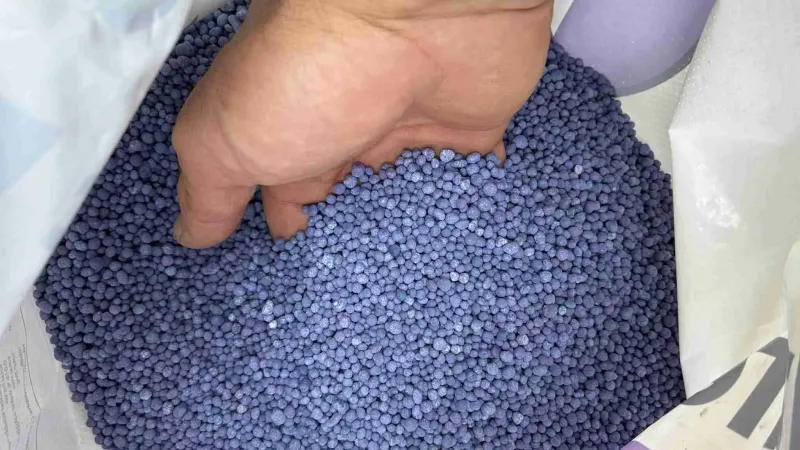
- Composition: NPK 10-5-20 + magnesium, calcium, and sulfur.
- Key Feature: A high content of potassium (K) in relation to nitrogen makes it ideal for autumn use.
- Secret Weapon: The nitrogen (N) is exclusively in the ammoniacal form (NH₄⁺). This is the crucial detail that allows for its safe autumn application.
- Potassium Form: In chloride form (KCl), which brings both benefits and risks that we will explain.
Situation Analysis: Trees and Soil in Mid-October
To understand the effect, we need to know what is happening in the garden during this period.
- State of the Trees: They are in an advanced stage of transitioning into dormancy (winter rest). They are ceasing growth and moving energy into the roots and woody parts. Nutrient uptake is minimal, so even a supply of nitrogen will not trigger unwanted new growth.
- State of the Soil: It is cold (below 10°C). At these temperatures, the activity of soil bacteria that transform nutrients is significantly slowed or completely stopped.
How Does It Work? The Action of Individual Components in Cold Soil
Nitrogen (N) – A Reserve for the Spring Start
Most people are afraid to apply nitrogen in the autumn. With Vin-Ovocerit, however, this fear is unfounded. The ammoniacal form (NH₄⁺) has a positive charge and binds tightly to soil particles. In cold soil, it is not converted to mobile nitrate (NO₃⁻) and therefore does not leach out. It remains in the root zone as a slow-release reserve that will be immediately available to the plants in the spring when they need it most for bud break.
Potassium (K) – The Winter Coat for Your Trees
The high potassium content is exactly what trees need before winter.
- Acts like "antifreeze": It increases the salt concentration in the cell sap, thereby lowering the freezing point and protecting the tissues from frost damage.
- Promotes wood maturation: It helps to harden and lignify young shoots, making them more resilient.
Chlorides (Cl⁻) – A Risk That Vanishes Over Winter
The potassium salt form (KCl) is cheaper but contains chlorides, which can be harmful to some plants. Why doesn't this matter in the autumn?
- Chlorides do not bind to anything in the soil and are highly mobile.
- Over the 4-5 winter months, rainwater reliably leaches them out of the root zone into deeper layers. By spring, when active nutrient uptake begins, their concentration is no longer dangerous.
Timeline of Action: What Happens from Autumn to Spring?
The Process Over Time
AUTUMN (Application): Potassium promotes frost hardiness. Nitrogen stabilizes in the soil. Growth is not stimulated.
▼
WINTER (Dormancy): Chlorides are gradually leached out. Other nutrients remain stored in the root zone.
▼
SPRING (Growth Begins): As the soil warms, nitrogen is gradually released. The tree has a complete range of nutrients immediately available for a fast and healthy start.
Take a Step Ahead: Think About Next Year's Harvest Today
Autumn fertilizing is the mark of an experienced gardener who doesn't just fix problems but prevents them. It is a simple and effective way to ensure healthy trees and a bountiful harvest. Discover Vin-Ovocerit fertilizer and other helpers for a successful overwintering of your garden in our selection.
Conclusion and My Personal Opinion
Applying Vin-Ovocerit fertilizer in mid-October is agronomically justified and safe. It functions as an effective depot fertilization that prepares trees for winter and gives them a head start in the spring.
I have been using it for years, but exclusively in the autumn. During the growing season, I avoid fertilizers with a chloride component. I recommend this fertilization especially for fruit trees after a heavy harvest or on lighter soils. Moreover, its price is amazing for the value it provides. For extremely sensitive crops like blueberries, however, I still prefer chloride-free fertilizers.
What is your proven method for autumn fertilizing? Share your experiences in the comments!
Author:
Dr. et Dr. Matej Prokop, PhD.
Related Products