Cart

BIO Hazelnut (Corylus avellana) HALL'S GIANT
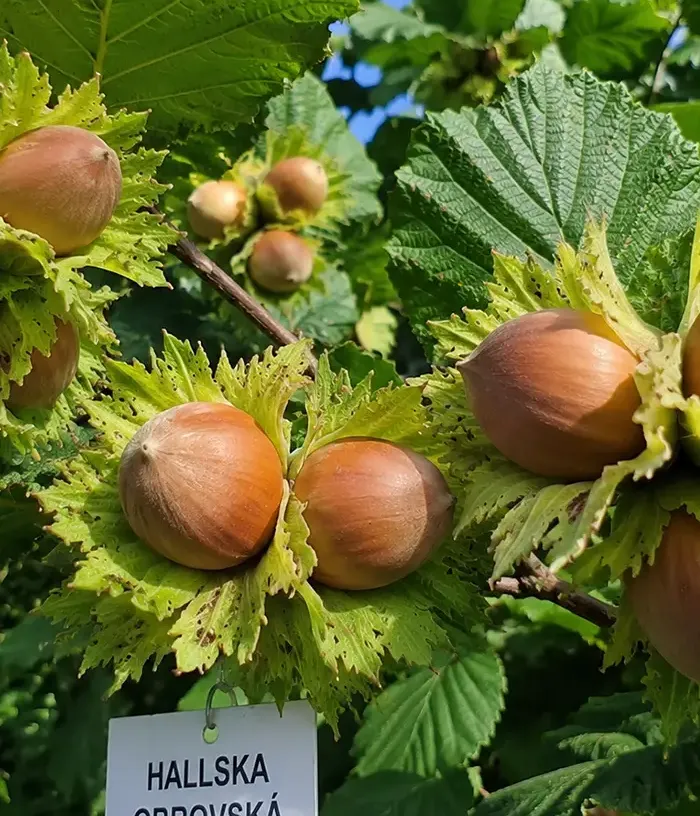
BIO Hazelnut (Corylus avellana) HALLS GIANT
BIO Hazelnut (Corylus avellana) HALL'S GIANT
Specifications
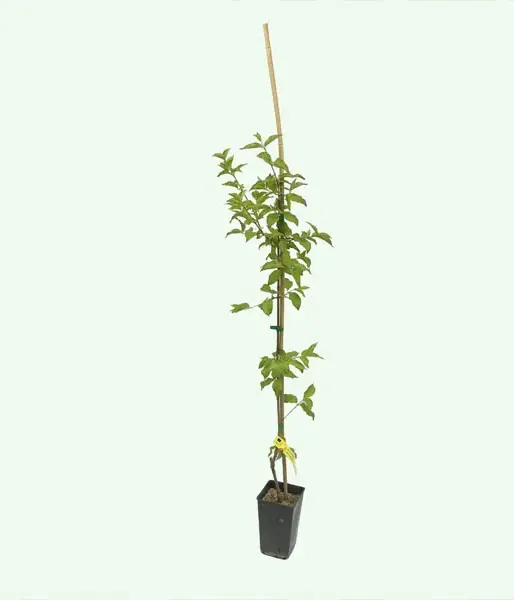
Height at sale160cm
PotC12
Rootstock Corylus colurna
Sell asTree
The standard delivery time for Germany is 3-5 working days.(except for goods "On request")
We send goods on Monday, Tuesday, Wednesday, by agreement also Thursday or Friday.
Price
44.90€
Ex Tax: 39.73€
  • Stock: In Stock
  • Model: Corylus

Hazelnut - Variety 'Hall's Giant' (Corylus avellana)

The 'Halle's Giant' cultivar is a time-tested German classic and a true cornerstone of European hazelnut cultivation. Dating back to the 18th century, this vigorous and stately variety stands out for its extraordinary stability and reliable cropping, even in challenging environments. Beyond delivering generous harvests of large, delicious nuts, it plays an invaluable role in the orchard as a universal pollen donor—ensuring successful pollination for virtually any other hazelnut variety nearby. Thanks to its dense, bushy habit, it is also the perfect choice for creating productive windbreaks and edible boundary hedges.

Origins and Pedigree:

  • Origin: Bred in Halle, Germany, in 1788 by Amtmann Büttner.
  • Botanical Classification: A valuable interspecific cross between the Filbert and the Common Hazel (Corylus maxima × Corylus avellana).

Key Advantages and Highlights:

  • Premier Pollinator: Globally recognized as the best universal pollen donor for nearly all hazelnut cultivars.
  • Substantial Nuts: Massive nuts (weighing 4 to 5 g) delivering a rich, distinctly sweet nutty flavor.
  • Extreme Cold Tolerance: Both the structural wood and the catkins safely withstand deep winter freezes down to -30 °C (-22 °F).
  • Exceptional Storability: Kernels rarely shrink or dry out in storage, maintaining premium quality for months.
  • Natural Pest Resistance: Highly tolerant of the hazelnut gall mite and less susceptible to hazelnut weevils.
  • Robust and Long-Lived: Forms a dense, towering shrub with decades of continuous productivity.

Detailed Plant Profile

Habit, Bloom, and Pollination

  • Growth and Stature: A vigorous, large-growing shrub or small tree reaching 4 to 6 meters in height. It naturally forms an upright, wide, and densely branched canopy.
  • Bloom Period: Catkins begin shedding pollen early in the year, typically between February and March. They are frost-proof and produce copious amounts of viable pollen.
  • Pollination Needs: It is cross-pollinating. To produce its own heavy crop, it requires a pollen partner (such as 'Cosford'), but it will effortlessly pollinate almost any other hazel planted nearby.

Nut Characteristics and Flavor Profile

  • Size and Shape: Large nuts (4 – 5 g) featuring a broad, conical shape, borne in clusters of 2 to 4.
  • Shell and Kernel: The shell is sturdy and medium-thick, providing excellent protection to the plump, sweet, and highly flavorful kernel. The crack-out (kernel) ratio sits at an impressive 42 to 45%.

Cultivation, Resilience, and Garden Uses

  • Hardiness: Hardy down to -30 °C, making it a reliable performer across all Central European zones, including exposed foothill areas.
  • Pest Tolerance: The harder shell discourages attacks from the hazelnut weevil, and the variety exhibits strong resistance to hazelnut gall mites (big bud mites).
  • Landscape Uses: Outstanding as a standalone specimen in larger yards, or planted in rows as an informal, edible windbreak and privacy hedge. Give it plenty of room to develop.
  • Harvest Window: Nuts ripen from mid-September through early October. It delivers high, uniform yields year after year, largely unaffected by seasonal weather swings.

Write a review

Note: HTML is not translated!
Rating
Bad Good
reCAPTCHA verification failed! Please try again.
The large-fruited Ukrainian variety Radost has an excellent flavour, hence its name. It is also suitable for growing at higher altitudes.The large-fru..
Price
29.90€
Ex Tax:26.46€
Add to Cart