Cart

Fig Tree (Ficus carica) DORÉE
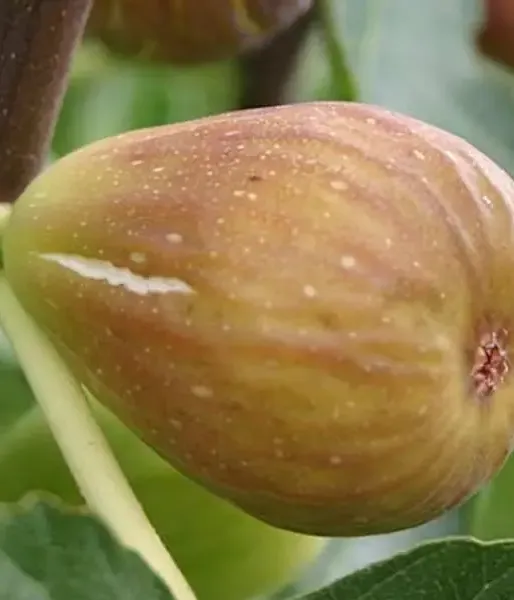
Fig Tree (Ficus carica) DORÉE
New
Fig Tree (Ficus carica) DORÉE
Specifications
Height at sale50cm
Pot2,5l
Sell as2 year old
Ripening timeSeptember/October
The standard delivery time for Germany is 3-5 working days.(except for goods "On request")
We send goods on Monday, Tuesday, Wednesday, by agreement also Thursday or Friday.
Price
39.00€
Ex Tax: 34.51€
  • Stock: In Stock
  • Model: Ficus carica

Fig Tree - Variety 'Dorée' (Ficus carica)

The 'Dorée' cultivar, also poetically known as the "Drop of Gold" (Goutte d'Or), stands as one of the oldest and most aristocratic jewels of French pomology. It represents the very essence of Mediterranean indulgence—combining prolific yields and solid cold tolerance with an unmistakably rich, honey-sweet flavor. Thanks to its naturally compact footprint and exceptionally early summer harvest, it is the dream choice for Central European gardeners looking to turn a sunny terrace or protected garden alcove into a golden fruit sanctuary.

Origins and Historical Trivia: This heritage French variety boasts a storied background. Over centuries, it proved its extraordinary climate resilience by flourishing in the blazing heat of Provence while simultaneously thriving in the much cooler gardens around Paris. In horticultural registers, it appears under the synonyms Goutte d'Or or Figue d'Or. It was first formally described by the French pomologist Merlet in 1667. A charming historical detail: early writers noted the fine web of superficial cracks on the skin of dead-ripe figs, comparing its appearance to a "beggar's torn cloak."

Top Benefits of this Variety:

  • Remarkably Early Harvest: The summer breba crop begins to mature as early as the beginning of July.
  • Gourmet Flavor Profile: A melting, honeyed sweetness paired with an ultra-fine, silky flesh texture.
  • Natural Ripeness Indicator: At peak sugar concentration, a glistening bead of thick syrup appears at the eye.
  • Compact Canopy: Naturally tidy growth habit, making it tailor-made for large containers and patio spaces.
  • Great Cold Tolerance: Mature wood reliably withstands winter temperatures dropping to -16 °C (3.2 °F).
  • Culinary Versatility: The second (autumn) crop is especially well suited for home drying and dehydrating.
  • Self-Fertile & Precocious: Parthenocarpic nature allows it to bear its first crops at a very young age.

Detailed Plant Profile

Habit and Foliage

  • Growth: Displays medium vigor while naturally staying dense, compact, and moderately spreading (both height and spread range between 2 and 3 meters). Because of these manageable dimensions, it is an elite choice for lifelong container growing.
  • Leaves: The foliage is medium to small in size, typically split into 3 to 5 distinct lobes.
  • Onset of Fruiting: Enters production remarkably early—gardeners can expect their first figs as soon as the 2nd or 3rd year after planting.

Fruit Characteristics – Two Crops

  • The Secret of the Amber Droplet: When the fig achieves absolute perfection in ripeness, a small, shiny drop of concentrated fruit nectar forms at the semi-open ostiole (eye). This is nature's foolproof visual cue that the sugars have peaked.
  • First Crop (Summer / Breba): Ripens exceptionally early (early July) on last year’s wood. These figs are large (85 – 100 g), pyriform in shape with a semi-open eye. The delicate skin is golden-yellow blushed with soft pink. The salmon-to-amber flesh contains few seeds and is intensely sweet.
  • Second Crop (Main / Autumn): Ripens on new shoots from mid-August through October. The fruits are slightly smaller (70 – 80 g) and more spherical. The skin turns a deep golden hue, while the light pink to strawberry-red flesh delivers a rich, highly concentrated dessert flavor.

Cultivation and Hardiness

  • Pollination: Belongs to the Adriatic group; it is fully self-fertile (parthenocarpic) and requires no fig wasps to set fruit.
  • Hardiness and Planting: Cold hardy down to -16 °C. We recommend transplanting 2 to 3-year-old trees into the garden. In colder areas, wrap the trunk with winter fleece until it develops a caliper of 6 to 7 cm.
  • Major Northern Climate Advantage: Because the breba harvest takes place in early July, it is one of the earliest figs available. This ensures that growers in cooler regions will harvest fully ripened fruit well before any early autumn chills arrive.

Drawbacks of the Variety:

  • Delicate Skin: The skin is soft and prone to surface splitting when fully ripe or during sudden heavy downpours.
  • Semi-Open Eye: Breba fruits feature an open ostiole, which can allow moisture to penetrate inside during prolonged rainy spells.
  • Poor Transportability: The tender figs bruise easily during transit and are undeniably best eaten fresh off the branch.

Write a review

Note: HTML is not translated!
Rating
Bad Good
reCAPTCHA verification failed! Please try again.
Hurmi Kaki FUYU is one of Japan's large-fruited varieties, popular because the fruit can be eaten directly from the tree when ripe. In our country, it..
Price
39.00€
Ex Tax:34.51€
Add to Cart
Hurmi Kaki ROJO BRILLANTE is one of the Japanese large-fruited varieties, popular because the fruit is of the highest quality. In our country it can b..
Price
39.00€
Ex Tax:34.51€
Add to Cart